

Fitness & Recovery · House Remedy
Recovery is the part of fitness that actually produces results. Training creates the stimulus — a controlled form of damage that signals the body to adapt. Recovery is when the adaptation occurs. Without adequate recovery, training is simply damage without the benefit. Yet most fitness environments and most fitness conversations are structured around the training side of this equation almost exclusively, treating recovery as what happens when you are not exercising rather than as an active process that determines the outcome of the exercise you do.
The Physiology of Adaptation
Muscle protein synthesis — the process of building new contractile proteins in response to training stimulus — peaks in the twelve to twenty-four hours following exercise and remains elevated for up to seventy-two hours depending on training volume and individual recovery capacity. During this window, the body requires adequate protein, sleep, reduced systemic inflammation, and an environment that supports parasympathetic nervous system dominance. Every systemic stressor during this window competes with recovery for biological resources.
This is where the home environment becomes a direct variable in fitness outcomes. Elevated cortisol from poor sleep, environmental stressors, or chronic noise exposure suppresses protein synthesis and promotes catabolism — the breakdown of muscle tissue rather than its repair. Inflammatory inputs from VOC exposure, poor water quality, or mycotoxin burden from mold activate immune pathways that consume the same cellular resources recovery requires. A home that generates systemic stress is a home that reduces the return on training investment.
Sleep Architecture and Physical Recovery
Growth hormone — the primary hormonal driver of tissue repair and muscle synthesis — is secreted almost exclusively during slow-wave sleep. Research published in the Journal of Clinical Endocrinology and Metabolism documents that disruption of slow-wave sleep reduces growth hormone secretion by 60 to 70 percent, with direct consequences for recovery rate and body composition over time. The bedroom environment determines slow-wave sleep quality more than sleep duration alone.
Temperature is the most underappreciated factor. Core body temperature must drop 1 to 2 degrees Celsius to initiate sleep, and the deepest slow-wave sleep occurs in a bedroom maintained between 65 and 68 degrees Fahrenheit. A room that is too warm — common in homes with inadequate thermal management — fragments sleep architecture and specifically reduces slow-wave duration without the occupant necessarily perceiving poor sleep quality. They simply recover more slowly than they should.
The Parasympathetic Environment
Recovery is fundamentally a parasympathetic state. The autonomic nervous system’s rest-and-digest mode — governed by the vagus nerve and characterized by reduced heart rate, lower cortisol, increased digestive activity, and tissue repair — is the biological state in which physical recovery occurs. Any input that activates the sympathetic nervous system — noise, blue light after dark, elevated cortisol from environmental stressors — directly interferes with this state.
The recovery-optimized home creates conditions for parasympathetic dominance in the hours between training sessions. This means acoustic calm in the primary living and sleeping areas. Warm-spectrum lighting after sunset that does not suppress melatonin. Air quality that does not activate a low-grade immune response. Temperature regulation that supports the thermoregulatory decline needed for deep sleep. These are design decisions with direct physiological consequences for anyone whose goals include physical adaptation.
Where to start
- Set your bedroom temperature to 65 to 68 degrees Fahrenheit for sleep. This is the single highest-impact physical change for slow-wave sleep quality and growth hormone secretion — the primary driver of physical recovery overnight.
- Eliminate blue-spectrum light in the two hours before sleep. Replace overhead lighting with warm lamps below 2700K. This preserves the melatonin surge that initiates deep slow-wave sleep and protects growth hormone release.
- Address acoustic stress in your sleeping environment. Traffic noise, HVAC hum, and other ambient sound above 40 decibels fragments sleep architecture and reduces slow-wave duration — even when you do not consciously perceive waking.
- Test your bedroom air quality. Elevated VOC levels activate a low-grade immune response that competes with tissue repair for biological resources during recovery. A HEPA air purifier in the bedroom reduces particulate load significantly.
- Design a post-training decompression space. A dedicated area for stretching, breathwork, or passive recovery — positioned away from screens and work surfaces — creates an environmental cue for parasympathetic transition after training.
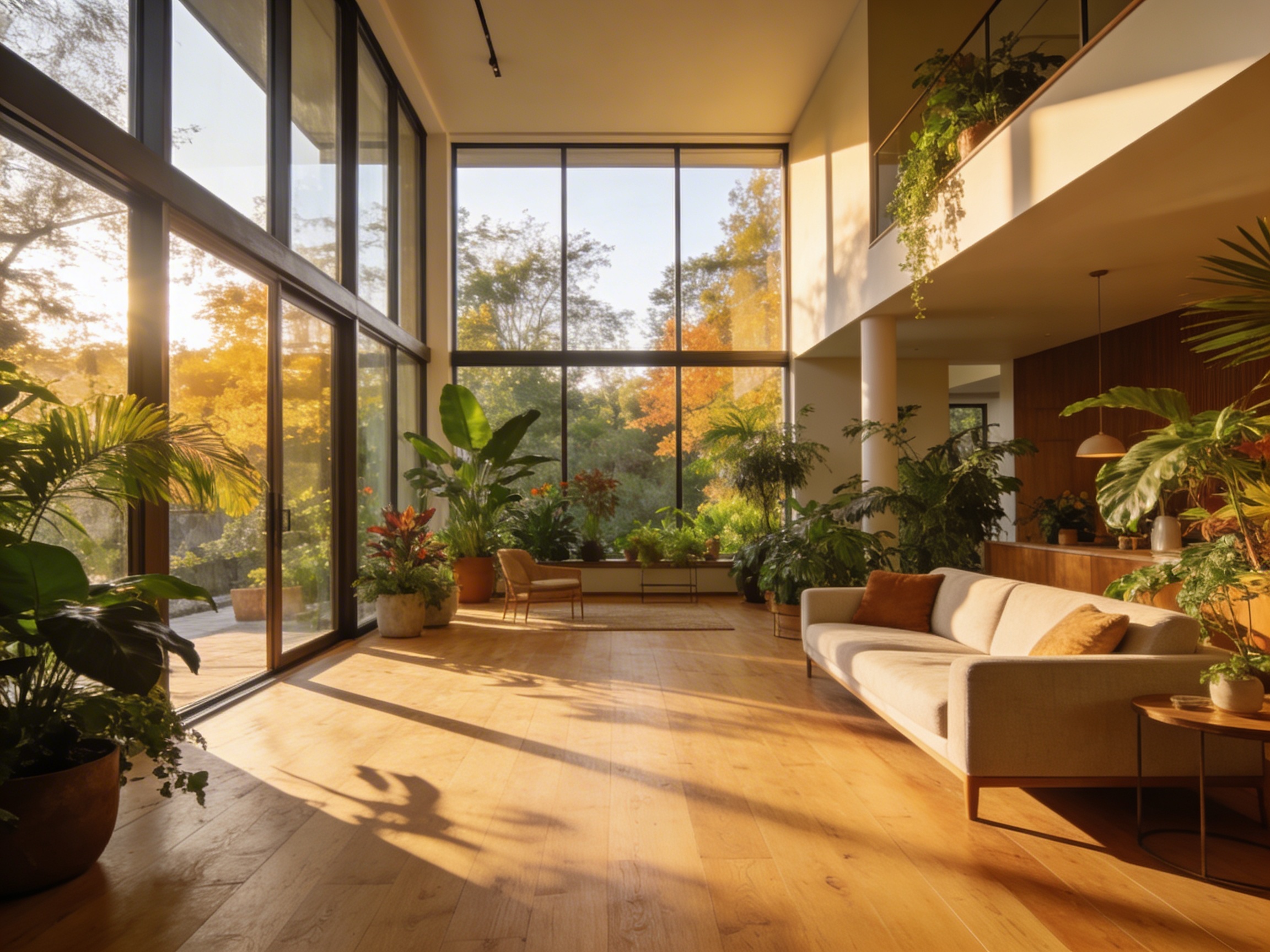
The training side of fitness is well documented and widely discussed. The environmental side of recovery almost never is. Yet the return on every training session is determined more by the quality of the recovery environment than by the sophistication of the training protocol. A home designed to support recovery — acoustically calm, thermally regulated, low in inflammatory inputs, lit for circadian biology — is a performance environment as genuinely as any gym.
What is the biggest obstacle to recovery in your current home environment — and is it one you have tried to address?