

Food Science · House Remedy
Every meal is a negotiation between your body and the trillions of microorganisms that live inside it. The bacteria, yeast, and fungi in your gut are not passive passengers — they are active participants in digestion, immune function, mood regulation, and inflammation. And the foods you eat do not affect them generically. Specific compounds in specific foods produce specific shifts in which organisms thrive and which ones are suppressed. Understanding those mechanisms turns eating from a vague health practice into a precise one.
Capsaicin: What a Jalapeño Actually Does Inside Your Gut
Capsaicin — the compound that makes chili peppers hot — is one of the most studied antimicrobial food compounds in current research. Its effects on the gut microbiome are not subtle. In animal studies, dietary capsaicin significantly increased the abundance of Faecalibacterium and Akkermansia, two bacterial genera consistently associated with immune regulation, reduced inflammation, and healthy body weight. Faecalibacterium prausnitzii is one of the most important symbiotic bacteria in the human intestine and is associated with protection against Crohn’s disease, obesity, asthma, and major depressive disorder. In capsaicin-treated subjects, it appeared where it had been entirely absent in controls.
At the same time, capsaicin reduced the abundance of Gram-negative pathogens that secrete lipopolysaccharide (LPS) — a bacterial endotoxin that, when it crosses the gut lining into the bloodstream, drives chronic low-grade inflammation linked to obesity and metabolic disease. Capsaicin also increased butyrate-producing bacteria like Ruminococcaceae and Lachnospiraceae. Butyrate is a short-chain fatty acid that fuels the cells lining the colon, strengthens the intestinal barrier, and reduces inflammation. The net effect of capsaicin in the research is not just antimicrobial — it is selectively antimicrobial, suppressing the organisms associated with disease while promoting the ones associated with health.
Beyond the gut microbiome, capsaicin has demonstrated direct antimicrobial activity against a remarkably wide range of pathogens, including Helicobacter pylori (a cause of peptic ulcers and gastric cancer), Salmonella, Staphylococcus, Listeria, and even Candida species. It interferes with biofilm formation — the protective matrix that makes certain infections resistant to treatment. The evidence is strong enough that researchers now describe capsaicin as a promising adjuvant antimicrobial compound, not just a food ingredient.
Garlic: Allicin and the Direct Attack on Candida
Garlic’s antimicrobial reputation is ancient, but the mechanism is now well documented. When a garlic clove is crushed or chopped, an enzyme called alliinase converts a compound called alliin into allicin — a sulfur-containing molecule with broad-spectrum antimicrobial properties. Allicin works by reacting with thiol groups on essential enzymes in bacteria and fungi, disrupting the metabolic processes they need to survive. It is effective against Gram-positive and Gram-negative bacteria, multidrug-resistant strains of E. coli, intestinal parasites including Giardia and Entamoeba, and viruses.
Where garlic distinguishes itself most clearly is in its antifungal activity against Candida albicans. Allicin penetrates the yeast’s cell membrane as a lipid-soluble compound, compromising its structural integrity and preventing the transition from yeast form to the more invasive hyphal form — the form responsible for tissue penetration and biofilm development. In laboratory studies, allicin’s minimum inhibitory concentration against Candida albicans has been measured as low as 0.05 micrograms per milliliter — comparable to fluconazole, the standard clinical antifungal drug. In a mouse model of systemic candidiasis, allicin treatment nearly doubled the mean survival time.
There is an important practical detail: allicin is unstable and degrades rapidly with heat. Cooking garlic destroys most of its antimicrobial activity. For the antifungal and antibacterial benefits, raw garlic — crushed and allowed to sit for ten minutes to maximize allicin formation — is significantly more effective than cooked garlic. This does not mean cooked garlic is without value. It retains prebiotic compounds that support beneficial gut bacteria. But the direct antimicrobial action is a raw-garlic phenomenon.
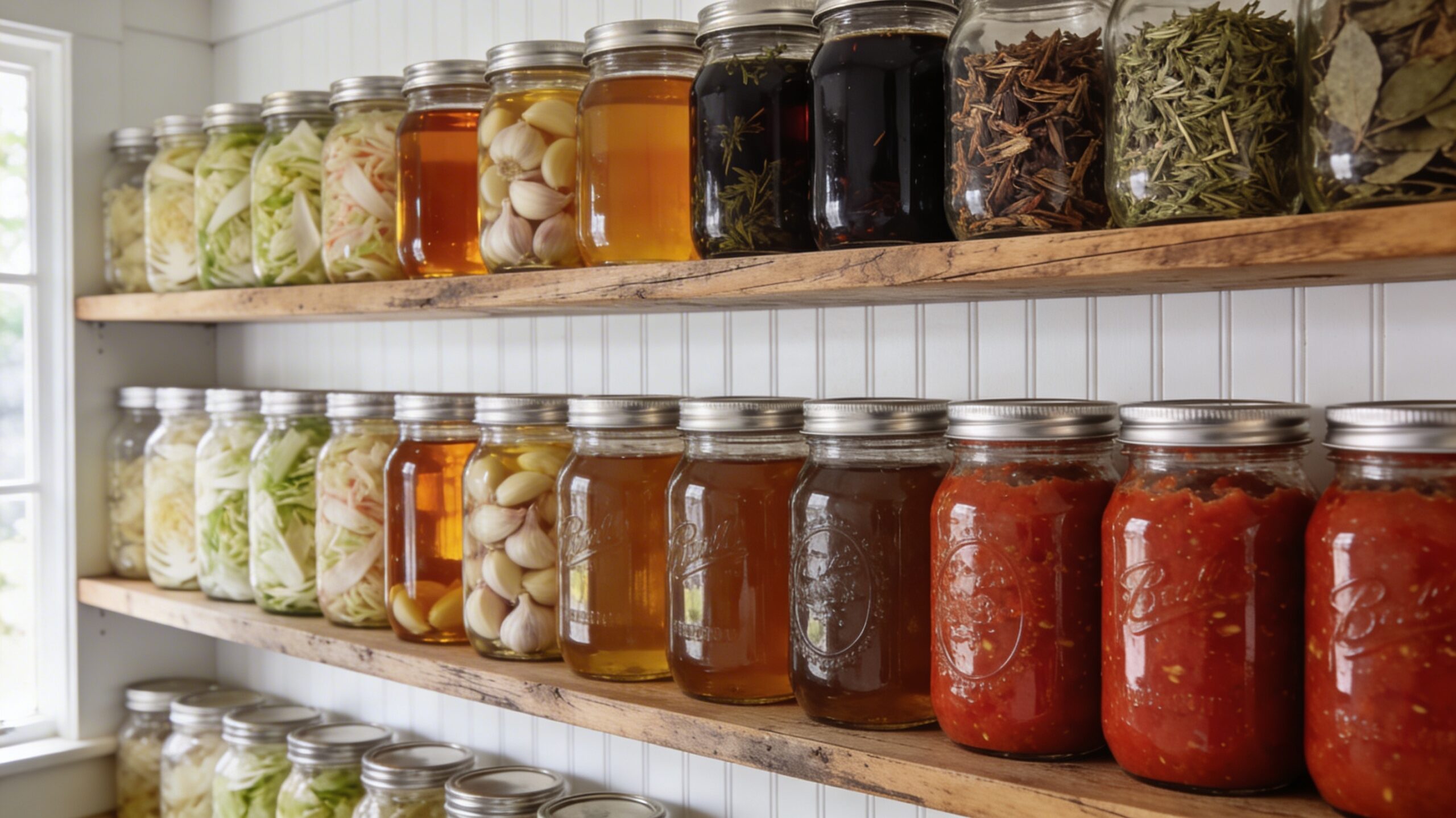
One of the simplest and most effective ways to get raw garlic into your diet consistently is to ferment it in raw honey. The process is exactly what it sounds like: peeled, lightly crushed garlic cloves submerged in unpasteurized honey, left to ferment at room temperature for several weeks. The garlic’s natural moisture activates a lacto-fermentation process — lactic acid bacteria naturally present on the garlic begin converting the honey’s sugars into lactic acid, gradually lowering the pH and creating an environment hostile to pathogens. The garlic stays raw throughout, which means the allicin and its derivatives remain intact. Honey contributes its own antimicrobial properties — hydrogen peroxide, low pH, and prebiotic oligosaccharides that specifically promote the growth of Lactobacilli and Bifidobacteria. The result is a food that combines the antifungal and antibacterial power of raw garlic with the prebiotic and probiotic benefits of a living ferment, in a form that is shelf-stable, easy to make at home with no special equipment, and far more palatable than eating raw garlic cloves on their own. A spoonful a day during cold and flu season, stirred into a dressing, or drizzled over food after cooking — it is one of the most practical intersections of antimicrobial food science and home fermentation available.
Sugar: The Compound That Feeds What You Do Not Want
If capsaicin and garlic suppress harmful organisms, refined sugar does the opposite. Candida albicans feeds primarily on simple sugars and refined carbohydrates. In environments with readily available glucose, Candida proliferates, shifts from its relatively benign yeast form to its invasive hyphal form, and begins forming the biofilms that make it resistant to both the immune system and antifungal treatment. A diet consistently high in sugar creates the ideal growth environment for the organisms you least want to encourage.
The mechanism extends beyond Candida. High sugar intake alters the ratio of Firmicutes to Bacteroidetes in the gut — a shift associated with increased caloric extraction from food, weight gain, and metabolic dysfunction. It reduces microbial diversity, which is one of the most consistent markers of gut health across the research. And it promotes the growth of Gram-negative bacteria that produce LPS, the same inflammatory endotoxin that capsaicin helps to suppress. The sugar-inflammation pathway is not a vague association. It is a documented, step-by-step progression from dietary sugar to bacterial LPS production to increased intestinal permeability to systemic inflammation.
Fermented Foods: What You Make at Home Is Not the Same as What You Buy
Fermented foods introduce live bacteria into the gut — but the diversity and character of those bacteria depend entirely on how the food was made. This is where one of the most underappreciated distinctions in nutrition comes in: homemade ferments and commercially produced ferments are not microbiologically equivalent.
Most commercially produced fermented foods are pasteurized after fermentation to extend shelf life, which kills all living microbes. They are then reinoculated with a small number of standardized bacterial strains — typically two to six species grown in a laboratory. The result is a consistent, shelf-stable product with a narrow microbial profile. Homemade ferments, by contrast, rely on wild fermentation: the bacteria present naturally on the raw vegetables, on your hands, on your kitchen surfaces, and in your air. Research has shown that these homemade ferments contain dozens of bacterial strains — a dramatically more diverse microbial ecosystem than anything available in a commercial product.
This distinction matters because microbial diversity is one of the most reliable predictors of gut health. A jar of homemade sauerkraut is not just delivering Lactobacillus. It is delivering a complex community of organisms that have been shaped by your specific kitchen environment — organisms your body is already in contact with through your skin, your air, and your surfaces. There is an emerging line of research suggesting that these locally adapted microbes may integrate more naturally with your existing gut ecosystem than standardized commercial strains grown in industrial conditions. Traditionally fermented kefir, for example, has been shown to lower cholesterol in animal models of obesity — an effect that was not replicated by specific commercial kefir beverages made with defined starter cultures.
The practical takeaway is straightforward: if you eat fermented foods for gut health, making them at home — even something as simple as sauerkraut in a jar with salt and time — provides a fundamentally different and more diverse microbial input than buying a commercial product. Both have value, but they are not doing the same thing.
Polyphenols: The Prebiotic Effect Nobody Talks About
Polyphenols are plant compounds found in berries, dark chocolate, coffee, green tea, and red wine. They are widely discussed for their antioxidant properties, but their most significant effect on the gut is as selective prebiotics — compounds that preferentially feed specific beneficial bacteria. Polyphenols are poorly absorbed in the small intestine, which means most of them arrive intact in the colon, where they become available to the resident microbiome.
The bacteria that benefit most are Bifidobacteria and Lactobacilli — both consistently associated with reduced inflammation, improved immune function, and stronger intestinal barrier integrity. Polyphenols also suppress certain pathogenic species, creating a dual effect: they feed the beneficial organisms while inhibiting the harmful ones. This is not a marginal effect. Studies on regular polyphenol consumption show measurable shifts in gut microbial composition, increased production of short-chain fatty acids, and improved markers of intestinal health.
Coconut Oil: Lauric Acid and Its Antifungal Mechanism
Coconut oil is approximately fifty percent lauric acid, a medium-chain fatty acid with well-documented antifungal properties. Lauric acid disrupts the lipid membranes of Candida species, causing cell death. It also interferes with the signaling pathways Candida uses to form biofilms. In laboratory studies, coconut oil has been shown to reduce Candida albicans colonization at concentrations achievable through dietary intake — not just at pharmacological doses.
What makes coconut oil particularly interesting is that its antimicrobial action is selective. While it is effective against Candida and certain pathogenic bacteria, it does not appear to significantly disrupt beneficial Lactobacillus populations. This selective action is rare among antimicrobial compounds and makes coconut oil a useful dietary tool for supporting microbial balance rather than indiscriminately suppressing the entire gut ecosystem.
Fiber: Different Types Feed Different Bacteria
Not all fiber is the same, and neither is its effect on the microbiome. Inulin — found in garlic, onions, leeks, asparagus, and chicory root — preferentially feeds Bifidobacteria. Resistant starch — found in cooked and cooled potatoes, green bananas, and legumes — feeds butyrate-producing bacteria like Roseburia and Faecalibacterium. Beta-glucans from oats and mushrooms stimulate different bacterial communities than the pectin in apples or the cellulose in leafy greens.
The point is that the diversity of fiber in your diet directly determines the diversity of bacteria in your gut. A diet that includes a wide range of plant fibers supports a wide range of bacterial species. A diet built around a narrow set of foods — even if those foods are technically healthy — produces a narrower microbiome. This is one of the reasons that ancestral diets, which included hundreds of different plant species over the course of a year, are associated with gut microbial profiles far more diverse than those found in modern Western populations eating the same fifteen to twenty foods on rotation.
Where to start
- Add raw crushed garlic to your meals regularly. Crush or chop the garlic and let it sit for ten minutes before eating to allow maximum allicin formation. Add it to dressings, dips, or on top of cooked food after plating. The antimicrobial benefit is in the raw preparation.
- Start a simple home ferment. Sauerkraut is the easiest entry point — shredded cabbage, salt, a jar, and time. The wild bacteria from your kitchen environment will produce a far more diverse microbial culture than any commercial probiotic. Start with a small amount daily and increase gradually.
- Diversify your plant fiber sources. Aim for variety across fiber types — inulin from onions and garlic, resistant starch from cooled potatoes, beta-glucans from oats, pectin from apples. Each type feeds a different bacterial community. More variety in fiber means more diversity in your gut.
- Reduce refined sugar deliberately. Sugar feeds Candida and LPS-producing bacteria while suppressing microbial diversity. You do not need to eliminate it entirely, but reducing the daily baseline creates a gut environment that favors the organisms you want over the ones you do not.
- Use coconut oil in your cooking rotation. The lauric acid in coconut oil provides a gentle, selective antifungal effect that supports microbial balance. It works well for medium-heat cooking, in smoothies, or as a base for homemade dressings.
The gut microbiome is not a static system that you either have or do not have. It is a living ecosystem that responds to what you feed it — literally, meal by meal. The research is increasingly clear that specific foods produce specific microbial shifts through documented biochemical mechanisms, and that the cumulative effect of those shifts shapes inflammation, immunity, metabolism, and mood over time. The most powerful thing about this is that it is entirely within your control. Every meal is an opportunity to shape the environment inside your body toward health — one ingredient at a time.
Which foods make you feel the best and which foods feel like they don’t agree with you?