

Kids · House Remedy
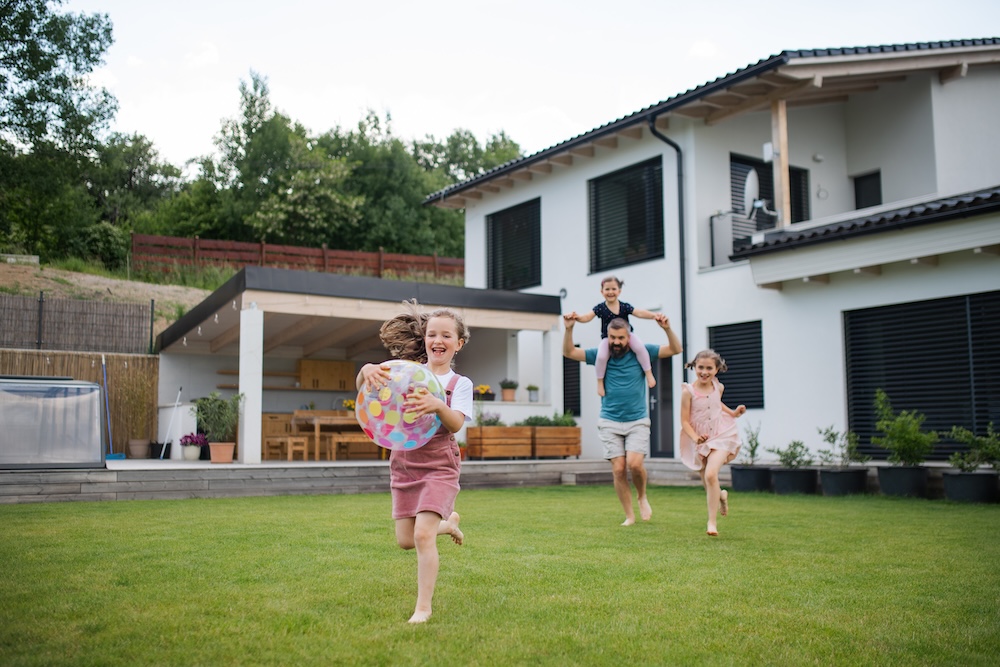
The lawn your children play on is one of the most chemical-intensive surfaces in the residential environment. It is also the surface they spend the most time in direct physical contact with — barefoot, on their hands and knees, lying in the grass, pulling at it, putting their fingers in their mouths afterward. If you have spent time thinking carefully about the air inside your home, the water coming through your faucets, and the materials in your kitchen — the yard deserves the same attention. What is on the grass is on their skin, and what is on their skin is in their body.
What the Research Actually Shows
A meta-analysis of 15 studies found that residential pesticide exposure during pregnancy was positively associated with childhood leukemia. A 2015 analysis published in Pediatrics found that home pesticide exposure was associated with a 47 percent increased risk of childhood leukemia. A study at Georgetown and Children’s National Medical Center found that mothers of children diagnosed with acute lymphoblastic leukemia were more than twice as likely to have reported using insecticides in the home compared to control families — and the children’s own urinary pesticide metabolite levels were significantly higher.
These are not fringe findings. They are published in mainstream pediatric and environmental health journals, and the pattern is consistent across multiple countries and study designs. The association is strongest during pregnancy and early childhood — the developmental windows when the body is most vulnerable to chemical interference with cellular growth and immune system formation.
One important nuance: the research connects childhood cancer risk to residential pesticide exposure as a class — the combined effect of herbicides, insecticides, and fungicides applied around the home — rather than to any single compound. This is relevant because the conversation about lawn chemicals often narrows to one product or ingredient. The science suggests that it is the cumulative, ongoing, multi-chemical nature of conventional lawn care that matters most.
Why Children Are Not Small Adults
Children’s exposure to lawn chemicals is qualitatively different from adult exposure, and this is important to understand. A child playing on a treated lawn encounters pesticide residues in ways that an adult walking across it does not.
They are closer to the ground. Volatilized pesticide compounds concentrate at ground level — a child’s breathing zone is exactly where concentrations are highest. An adult’s nose is five feet above the lawn. A toddler’s is twelve inches.
They touch everything and then touch their mouths. Hand-to-mouth behavior is a defining characteristic of early childhood. Every residue on a blade of grass or a handful of soil is a potential ingestion pathway that barely exists for adults.
They breathe faster for their size. A child’s respiration rate per unit of body mass is significantly higher than an adult’s, which means more air processed — and more airborne residue inhaled — relative to their body weight.
Their detoxification systems are still developing. The liver enzymes that process chemical compounds in adults are not fully mature in young children. The same dose that an adult’s liver handles routinely is a proportionally larger burden on a child’s developing system.
This is why the research consistently finds that children carry disproportionately higher pesticide body burdens than adults living in the same environment. They are not simply smaller versions of us. They interact with the environment differently, and their biology processes what they encounter differently.
The Lawn Does Not Need What We Have Been Giving It
Here is the part that surprised me when I started looking into this: the conventional lawn care approach — regular applications of herbicide and fertilizer on a fixed schedule — is solving a problem that better soil management largely eliminates. Weeds thrive in thin, compacted, nutrient-poor soil. Healthy soil with good biology supports dense, deep-rooted turf that naturally crowds out weeds without chemical intervention.
The transition to a chemical-free lawn is not complicated, but it does take a season of patience. It typically involves aerating compacted soil, overseeding with grass varieties appropriate for your climate and sunlight conditions, top-dressing with compost to feed the soil biology, and adjusting watering schedules to encourage deep root growth rather than shallow dependence. Once the turf is established and the soil is healthy, the weed pressure that drove the pesticide use in the first place drops significantly.
The result is a lawn your children can roll around on without you thinking twice about it. That peace of mind is worth a season of transition.
What Comes in on Their Shoes — and Yours
Even if your own lawn is chemical-free, your children walk on treated surfaces — parks, school grounds, neighbors’ yards, sports fields. Research has consistently shown that the majority of pesticide residue found on indoor floors arrives via shoe soles. A study found that the common lawn herbicide 2,4-D was detected in air quality and on all interior surfaces throughout every home tested — transported inside on shoes and tracked across floors where children crawl, sit, and play.
A shoes-off policy at the door is the single most effective practice for keeping outdoor chemical residues out of the indoor environment. It sounds simple because it is simple. It is also one of the most well-supported environmental health interventions in the residential literature. Your children’s play surfaces inside the home are only as clean as what walks across them.
The Neighbors’ Lawn
This is the part no one wants to talk about, but it is real: pesticide drift crosses property lines. When your neighbor applies herbicide on a windy day, some of it lands on your property. When a lawn service treats the yard next door, the volatilized compounds travel. You cannot fully control this — but you can reduce indoor exposure through a shoes-off policy, you can close windows during and after nearby applications, and you can make your own property a genuinely clean zone for your family.
Some communities have begun adopting cosmetic pesticide bans for non-agricultural use. If yours has not, you can still make the decision for your own home and share what you have learned with neighbors who are open to it. Many people use lawn chemicals because they were never given a reason not to. The information alone can shift the decision.
Where to start
- Stop all pesticide and herbicide application on your lawn. This is the single highest-impact change. If you are using a lawn service, ask specifically whether they apply synthetic herbicides, insecticides, or fungicides — and stop those applications. A season of imperfect grass is a small price for a chemical-free play surface.
- Start building healthy soil. Aerate compacted areas, overseed with grass varieties suited to your region, and top-dress with compost. Healthy soil grows dense turf that resists weeds naturally. This is the long-term replacement for chemical weed control — and it works.
- Implement a shoes-off policy at every entry. This keeps tracked-in pesticide residues off the floors where your children spend most of their indoor time. Provide a shoe rack or basket at the door to make it easy and habitual.
- Wash hands and feet after outdoor play. Especially before eating. This is the most direct way to interrupt the hand-to-mouth exposure pathway that is the primary concern for young children.
- Choose natural pest control for the problems that actually arise. Neem oil, diatomaceous earth, beneficial insects, and companion planting address specific pest issues without the broad chemical exposure of conventional products. Most yards need far less intervention than the lawn care industry suggests.
Your yard should be the place your children feel safest — barefoot in the grass, hands in the dirt, face in the clover. That is what a childhood outdoors is supposed to feel like. Making sure the ground beneath them is genuinely clean is one of the most loving, practical things you can do for the people who will spend the most time closest to it.
Do you use lawn chemicals at home? What led to that choice — and would you consider an alternative?