
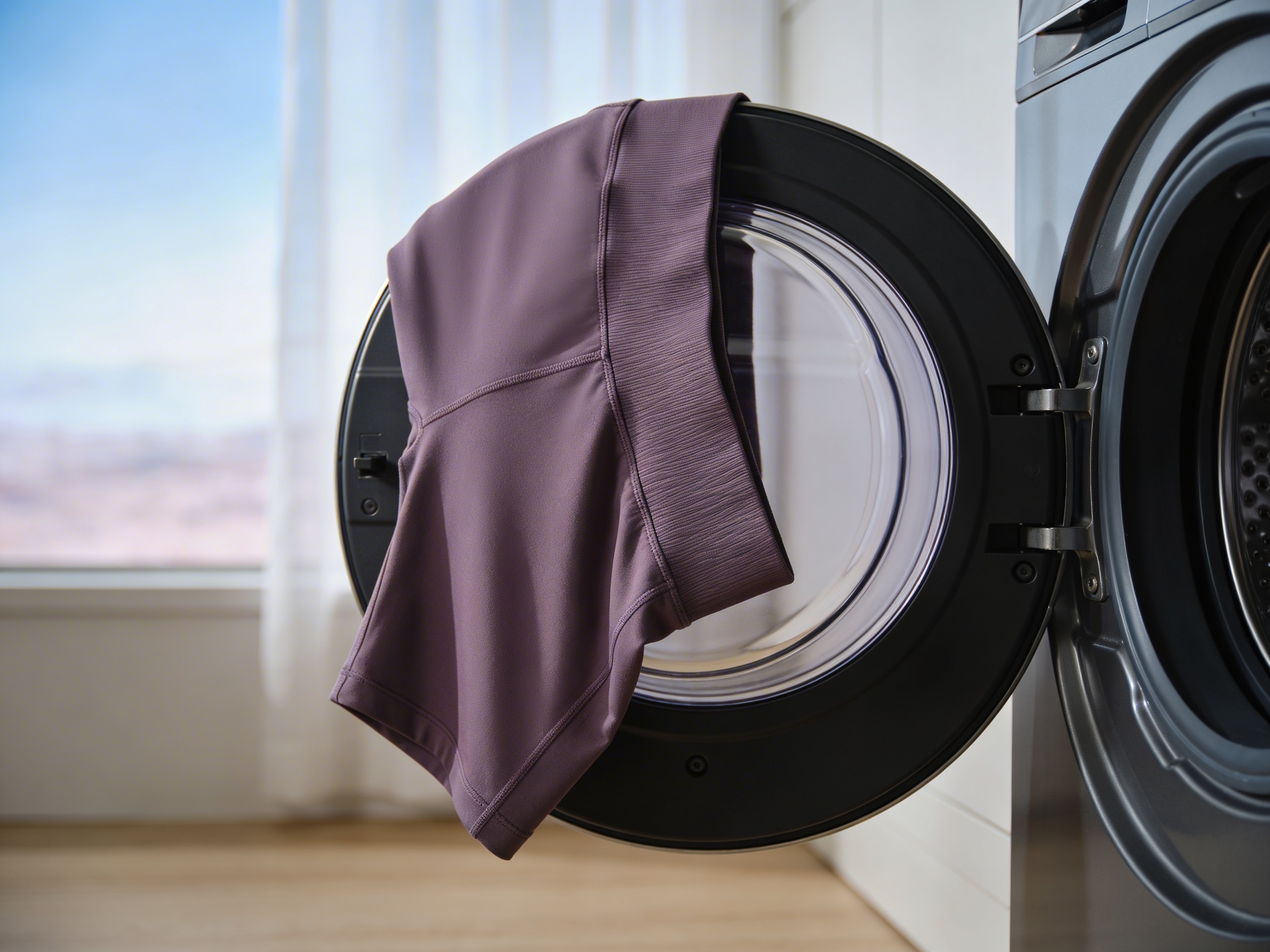

The laundry machine has become the subject of more environmental concern than perhaps any other domestic appliance — not because of its energy use, but because of what leaves it. Every wash cycle involving synthetic textiles releases microplastic fibers into wastewater. A significant portion of those fibers escape treatment plant filtration. They end up in rivers, oceans, drinking water, and ultimately in human tissue. And the cycle doesn’t stop at the environment — it comes back into your home through your water supply, your laundry room air, and the garments themselves.
The Microplastic Math
A single synthetic fleece jacket can release over 250,000 microplastic fibers per wash cycle. A polyester t-shirt releases fewer — approximately 5,000 to 10,000 per wash — but the cumulative output from a household washing multiple synthetic garments per week is substantial. Studies examining wastewater treatment plant effluent consistently find that standard treatment processes capture 70–99% of microplastic fibers by number, but the 1–30% that escapes represents an enormous absolute volume given the total laundry volume processed daily by municipal systems.
The fibers that escape enter surface water, marine environments, and the water cycle. Microplastic fibers have been detected in tap water, bottled water, rainwater, deep ocean sediment, Arctic ice, and human tissue including lung tissue, blood, placenta, and breast milk. The health implications are under active research — the presence of plastic particles in human tissue is documented; the dose-response relationship between fiber load and specific health outcomes is not yet fully characterized. What is characterized is that the primary source of indoor airborne microplastic fibers is synthetic textiles — and the laundry room is where fibers are most concentrated.
“A single fleece jacket releases over 250,000 microplastic fibers per wash. Microplastic fibers have been found in human lung tissue, blood, placenta, and breast milk. The laundry room is where the concentration is highest — and where the simplest interventions are available.”
The Detergent Problem
Conventional laundry detergents contain a specific chemical class — quaternary ammonium compounds (quats) — that deserves more attention than it receives. Quats are surfactants that remain on fabric after rinsing, which is intentional: they reduce static, soften fabric, and provide antimicrobial properties. The same residue that softens your laundry sits against your skin for the duration of wear and is transferred to your skin’s surface during sweating.
Quats have been classified as respiratory sensitizers — compounds that can induce asthma and airway reactivity with repeated exposure — and are associated with contact dermatitis. They are the active ingredient in most fabric softeners and dryer sheets, and are present in many detergents marketed as “gentle” or “sensitive.” Synthetic fragrance compounds in laundry products off-gas from freshly laundered clothing and from the laundry room itself — contributing to indoor VOC load that standard detergent labels do not disclose because fragrance formulas are protected as trade secrets.
Dryer Exhaust: The Indoor Air Problem
The dryer is a significant source of indoor microplastic fiber release — fibers captured in the lint trap represent a fraction of total fiber shed; the remainder exits through exhaust ductwork. If that ductwork vents to the exterior correctly, the fibers leave the home. If the duct is poorly sealed, disconnected, or if the dryer vents into an interior space (a practice found in some older homes), fibers and dryer exhaust VOCs enter the living space directly.
Dryer sheets volatilize fragrance compounds and quat residues at high heat, releasing them into the dryer exhaust and the laundry room air. Homes with interior dryer venting and dryer sheet use combine to create a laundry room with measurably elevated VOC and particulate concentrations — a space that many households treat as a pass-through but that some people, particularly those who fold laundry in the room, spend significant time in.
What the Wash Bag and Cora Ball Actually Do
The Guppyfriend wash bag and Cora Ball are the two most widely available microplastic capture devices for home laundry. The Guppyfriend is a sealed mesh bag into which synthetic garments are placed before washing — fibers shed into the bag rather than into the wash water, and are collected in the bag corners for disposal. Studies have found it captures approximately 54% of fibers that would otherwise be released. The Cora Ball is a latticed silicone ball placed loose in the wash that collects fibers into visible clumps — less effective per unit but easier to use with full loads.
Neither is a complete solution — the majority of fibers still escape — but both meaningfully reduce the volume entering the wastewater system and reduce the fiber load re-deposited on garments for the next wear. Combined with cold-water washing (cold water reduces fiber shedding compared to hot) and less frequent washing of synthetic garments (only when genuinely soiled rather than after every wear), they represent a realistic reduction in both environmental release and domestic fiber exposure.
- Switch to a fragrance-free, quat-free detergent. Seventh Generation Free & Clear, Molly’s Suds, and similar plant-surfactant-based detergents clean effectively without depositing quat residues on fabric or releasing synthetic fragrance VOCs into the laundry room. One permanent swap that eliminates the primary chemical skin contact issue in laundry.
- Replace dryer sheets with wool dryer balls. Reusable, fragrance-free, effective at reducing static and drying time, and free of quaternary ammonium compounds. A permanent swap with no ongoing cost after the initial purchase of three to six balls.
- Use a Guppyfriend bag for synthetic garment loads. Place fleece, polyester, and nylon garments inside the bag before washing. The fiber collection visible in the bag corners after each wash makes the problem concrete — and disposable rather than entering your water.
- Wash synthetic garments in cold water and only when genuinely soiled. Cold water reduces fiber shedding. Wearing synthetic garments two to three times between washes — for items not in direct contact with high-sweat zones — reduces cumulative fiber release and extends garment life simultaneously.
- Verify that your dryer vents to the exterior and check the duct annually. Dryer exhaust carries microplastic fibers and VOCs. Interior venting or a disconnected duct introduces both directly into the home’s air. Check the exterior vent cap and duct connections once a year — a five-minute inspection with significant indoor air quality implications.
The laundry room is a small space with an outsized impact on indoor air quality, water quality, and the chemical load on your skin. Most of the interventions that improve it are permanent swaps rather than ongoing behaviors — a wash bag purchased once, dryer sheets replaced once, detergent changed once. The ongoing cost is zero. The cumulative benefit compounds with every load.
If the lint you pull from your dryer trap is primarily microplastic fiber — and it almost certainly is — where do you think the fibers that don’t get caught are going?