
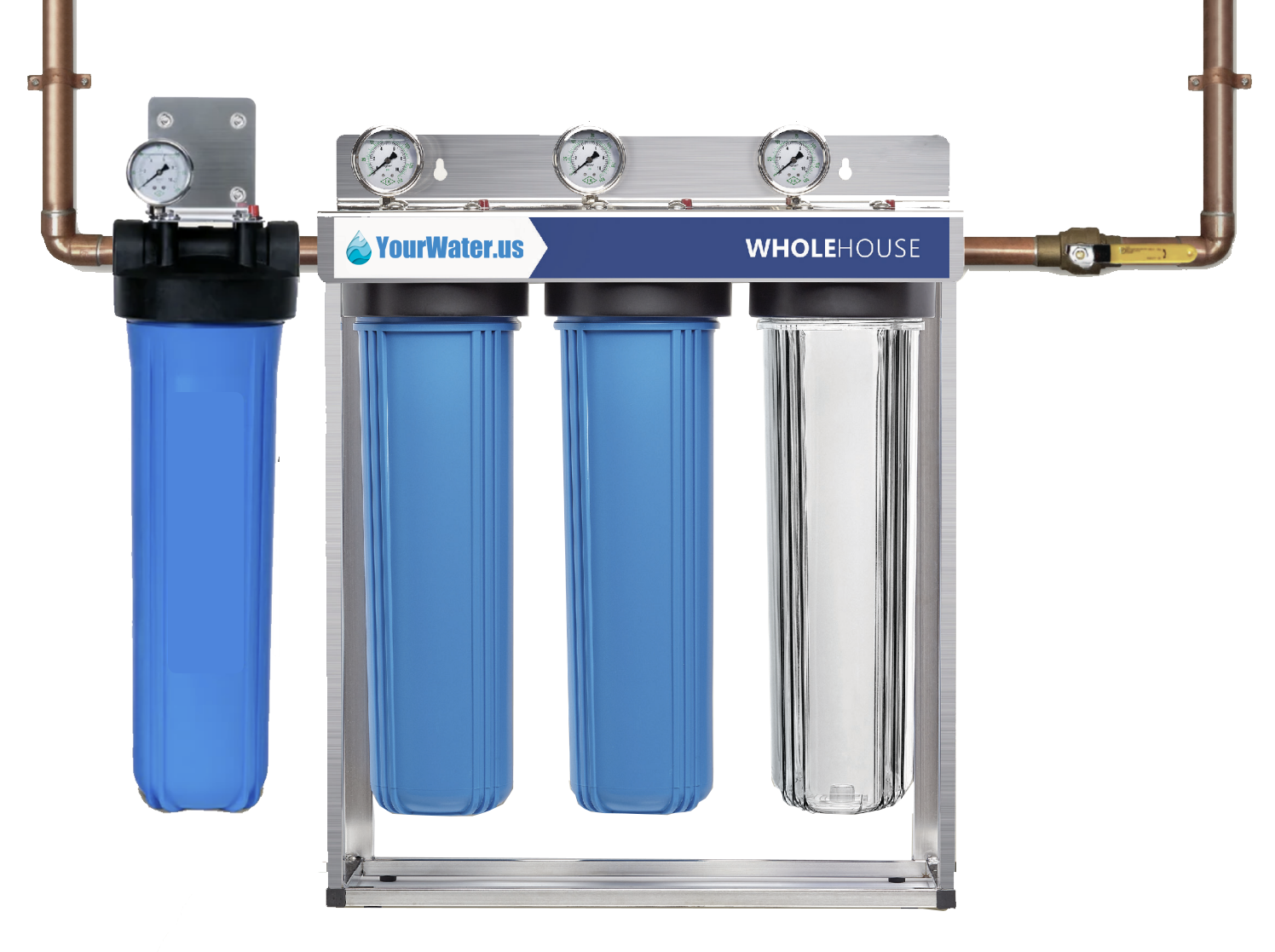

The decision to install a whole-house water filtration system is one of the most comprehensive and highest-leverage home health investments available — and one that requires careful consideration of what is being filtered, how different technologies perform against specific contaminants, and what the realistic cost picture looks like over the lifespan of the system. Unlike point-of-use filters at a single tap, whole-house filtration treats every water outlet in the home simultaneously — the kitchen sink, showers, bathtubs, laundry, dishwasher — making it the only approach that addresses the full spectrum of daily water contact rather than just the drinking water fraction.
Why Drinking Water Is Only Part of the Picture
The case for whole-house filtration begins with a fundamental observation about water use patterns. Drinking water represents only a fraction of total daily water contact. The shower alone — with hot water opening skin pores, steam concentrating volatile compounds for inhalation, and 8 to 10 minutes of continuous skin exposure — has been shown in research to deliver a higher blood trihalomethane load than drinking a liter of tap water. Laundry washed in chlorinated water deposits chlorine residue on fabric that the skin contacts for 16 or more hours. Dishwasher steam carries volatile disinfection byproducts into the kitchen air during and after cycles.
A point-of-use filter at the kitchen tap produces clean drinking water. It does not address any of these other routes. Whole-house filtration is the only intervention that treats water quality as a whole-home issue — because water contact in the home is a whole-home issue.
The Main Technology Types and What They Do
Catalytic carbon whole-house filters are the most common and appropriate choice for municipal water supplies treated with chloramine — the disinfectant that has increasingly replaced chlorine in many water systems because it is more stable and produces fewer regulated disinfection byproducts. Standard activated carbon filters remove free chlorine effectively but perform poorly against chloramine. Catalytic carbon — activated carbon that has been treated to alter its surface chemistry — removes both chlorine and chloramine and is the correct specification for any household on a chloramine-treated supply. Most whole-house carbon filters on the market use standard activated carbon; catalytic carbon systems are more expensive but the only ones that address chloramine.
KDF (Kinetic Degradation Fluxion) media is often combined with carbon in whole-house systems to address heavy metals — particularly lead and mercury — through a redox reaction that converts them to less soluble forms. KDF also has antimicrobial properties that prevent bacterial growth within the filter media, extending service life. A carbon-KDF combination addresses chlorine, chloramine, some heavy metals, and sediment in a single whole-house stage.
Whole-house reverse osmosis is the most comprehensive option — removing virtually all dissolved contaminants including PFAS, nitrates, heavy metals, and disinfection byproducts — but requires significant infrastructure, produces wastewater, reduces water pressure, and is substantially more expensive to install and maintain than carbon-based systems. For most municipal water supplies, a catalytic carbon whole-house filter combined with a reverse osmosis unit at the kitchen tap is the better cost-performance combination than whole-house RO.
“A 10-minute hot shower delivers a higher blood trihalomethane load than drinking a liter of tap water. Point-of-use kitchen filters address only the fraction of daily water contact that comes from drinking. The shower, the laundry, and the dishwasher are not filtered.”
What a Whole-House Filter Does Not Do
Carbon-based whole-house systems — even catalytic carbon — do not effectively remove nitrates, fluoride, or PFAS compounds. They reduce heavy metals modestly but are not certified to the NSF/ANSI Standard 53 levels required to make lead reduction claims. For households with lead service lines, high nitrates from agricultural runoff, or documented PFAS contamination, a whole-house carbon filter addresses the chlorine and chloramine exposure but does not solve the specific contaminant problems that require reverse osmosis or ion exchange at the point of use.
This is why the filter choice should follow the water test rather than precede it. A whole-house catalytic carbon system is the correct first investment for any municipal water supply — it addresses the universal contaminants present in virtually all treated water. What it leaves unaddressed is determined by what a specific water test reveals, and point-of-use filtration fills those gaps.
Cost Analysis: System, Installation, and Maintenance
Whole-house carbon filtration systems range from $500 to $2,500 for the unit, with professional installation adding $200 to $800 depending on the complexity of the installation location and existing plumbing. Filter media replacement is typically required every 3 to 5 years at a cost of $100 to $400 depending on system size and media type. Spread over a 10-year period, the total cost of a well-chosen whole-house carbon system is $150 to $350 per year — less than many households spend on bottled water that does not address shower, bath, or laundry water exposure at all.
The secondary cost benefit that is less often calculated: filtered water significantly reduces scale buildup in water-using appliances — water heaters, washing machines, dishwashers — extending their effective lifespan and reducing maintenance costs in ways that are measurable over a five to ten year period. Hard water without filtration is one of the primary causes of premature appliance failure and pipe scale accumulation that reduces water heater efficiency by up to 29%.
- Test your water before choosing a system. A certified laboratory water test identifies your specific contaminant profile — chlorine vs. chloramine, lead levels, nitrates, hardness, PFAS. This determines which whole-house technology is appropriate and what point-of-use gaps need filling. Buying a system before testing is guessing at the problem.
- Confirm whether your municipal supply uses chlorine or chloramine — and specify catalytic carbon if it is chloramine. Call your water utility or check their annual water quality report. If chloramine is present, a standard activated carbon whole-house filter will not remove it. Catalytic carbon is the required specification.
- Combine a whole-house carbon filter with a reverse osmosis unit at the kitchen tap for the best cost-performance combination. The whole-house system addresses chlorine, chloramine, and the shower and laundry exposure routes. The under-sink RO handles lead, PFAS, nitrates, and fluoride at the drinking and cooking water point. Together they cover virtually all contaminants at a cost substantially below whole-house RO.
- Size the system to your household flow rate. A whole-house filter installed on a 4-bedroom home’s water supply needs to handle peak flow without pressure drop. The system’s flow rate rating in gallons per minute should match or exceed the home’s peak demand — typically 3 to 6 GPM for a standard household. Undersized systems reduce water pressure noticeably.
- Set a media replacement reminder at installation. Whole-house filter media that has exceeded its service life does not filter — it may release accumulated contaminants back into the water. Set a calendar reminder at installation for the manufacturer’s recommended replacement interval, typically 3 to 5 years, and treat it as a non-negotiable maintenance date.
The whole-house filter is worth it for any household serious about reducing total daily chemical water exposure — which is to say, any household that understands that the skin and respiratory tract are as relevant to water health as the digestive system. It is the water equivalent of upgrading from a single-room air purifier to whole-house mechanical ventilation: the complete solution rather than the partial one.
If your shower delivers more trihalomethanes into your bloodstream than drinking a liter of tap water — and you only have a filter on the kitchen tap — which exposure are you actually managing?