

Therapeutic Spaces · House Remedy
The sauna is the most extensively researched thermal therapy in the wellness literature, with a body of evidence that most other health interventions would envy. The Finnish relationship with sauna is cultural and ancient, but the science that has emerged from studying sauna-using populations is specific, mechanistic, and increasingly difficult to dismiss.
The Cardiovascular Research Is Unusually Strong
The most compelling sauna research comes from the Kuopio Ischemic Heart Disease Risk Factor Study — a longitudinal cohort study following over two thousand Finnish men for more than twenty years. The findings, published in JAMA Internal Medicine, documented a dose-dependent relationship between sauna frequency and cardiovascular mortality: men who used the sauna four to seven times per week had a 63 percent lower risk of sudden cardiac death compared to those who used it once weekly. All-cause mortality was reduced by 40 percent.
The mechanism is not simply relaxation. Sauna use produces a cardiovascular response that meaningfully resembles moderate aerobic exercise. Core temperature rises to 38 to 39 degrees Celsius. Heart rate increases to 100 to 150 beats per minute. Cardiac output increases by 60 to 70 percent. Plasma volume expands. These are training adaptations, not merely comfort responses. Regular sauna use improves arterial compliance, reduces blood pressure, and produces measurable improvements in endothelial function — the health of the inner lining of blood vessels that is central to long-term cardiovascular resilience.
Heat Shock Proteins and Cellular Repair
One of the less-discussed mechanisms of sauna benefit involves heat shock proteins — molecular chaperones produced by cells in response to thermal stress. Heat shock proteins perform critical maintenance functions: they refold misfolded proteins, prevent protein aggregation, and facilitate the clearance of damaged cellular components. Their production is triggered by heat exposure and peaks in the hours following a sauna session.
The relevance to longevity is significant. Protein misfolding and aggregation are central mechanisms in neurodegenerative diseases including Alzheimer’s and Parkinson’s. Heat shock proteins provide a natural mechanism for reducing this aggregation. Research published in the European Journal of Epidemiology found that frequent sauna use was associated with a significantly reduced risk of dementia and Alzheimer’s disease — a finding consistent with the heat shock protein mechanism and with the known relationship between vascular health and cognitive aging.
Growth Hormone and Metabolic Effects
Sauna use produces dramatic increases in growth hormone release — a response that appears to be among the most potent non-pharmacological growth hormone stimuli available. Studies document two to five times baseline growth hormone levels following a single sauna session, with effects compounding across repeated sessions. Growth hormone plays a central role in tissue repair, muscle maintenance, fat metabolism, and the preservation of lean body mass with aging — all processes that decline significantly from midlife onward.
The metabolic implications are meaningful for anyone interested in body composition and longevity. The combination of heat shock protein production, growth hormone release, and cardiovascular training effects positions regular sauna use as a genuinely potent anti-aging intervention — one with a safety profile and research base that compares favorably to most pharmaceutical approaches to the same outcomes.
Traditional Cedar Versus Infrared: What the Research Shows
Traditional Finnish saunas operate at 80 to 100 degrees Celsius with low to moderate humidity. Infrared saunas operate at lower temperatures (45 to 60 degrees Celsius) by heating the body directly rather than the surrounding air. The majority of the robust cardiovascular and longevity research has been conducted on traditional saunas — infrared protocols have a smaller and more recent research base, though preliminary findings are promising for pain management, recovery, and cardiovascular benefit.
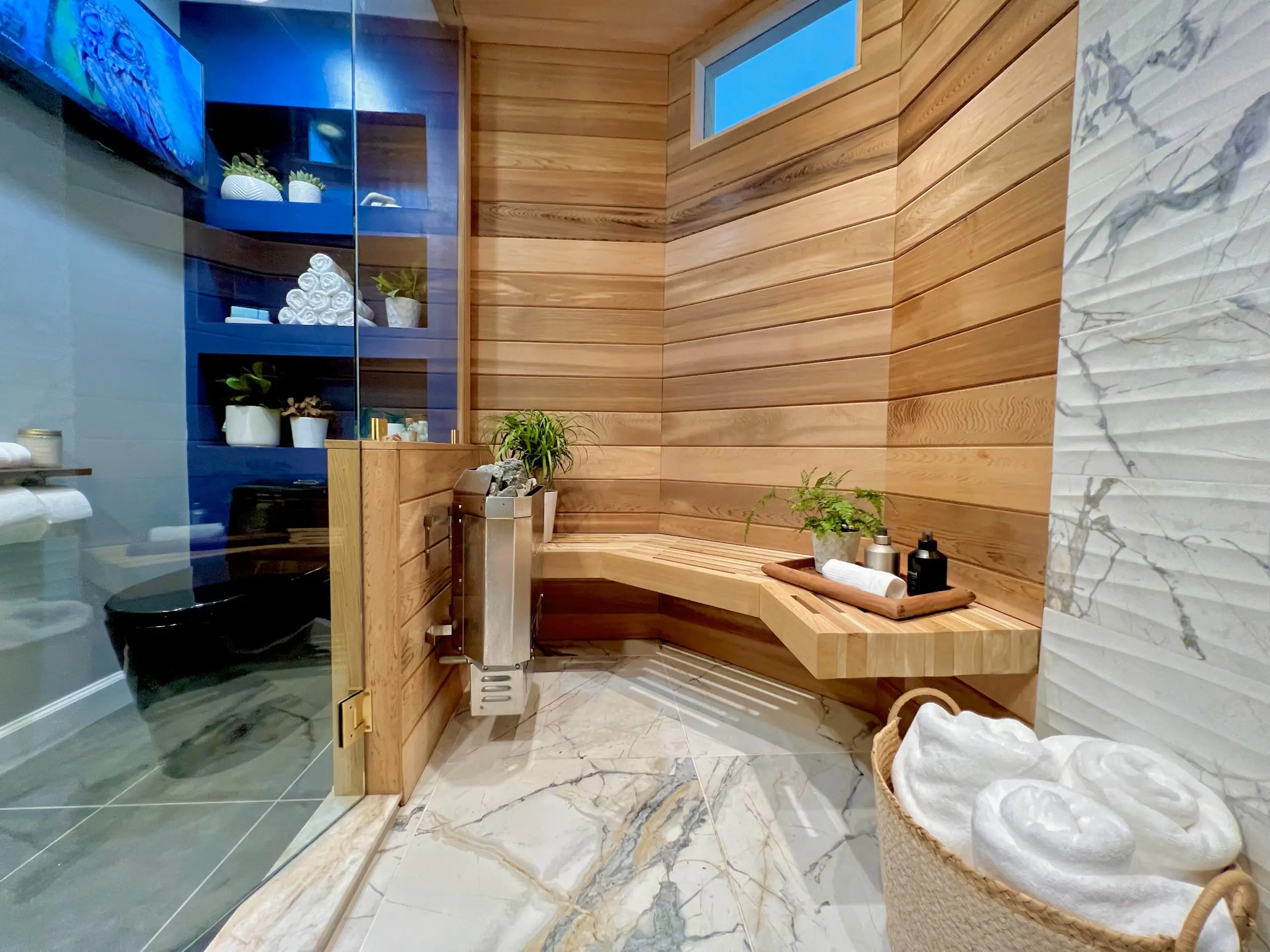
Cedar is the traditional material of choice for good reason. It is naturally antimicrobial, handles repeated heating and cooling cycles without warping or cracking, does not off-gas significantly at sauna temperatures, and maintains a comfortable surface temperature. It also absorbs and releases moisture in a way that supports comfortable hygrometric conditions. Avoid any sauna construction using treated wood, MDF, or synthetic adhesives — at sauna temperatures, off-gassing from these materials is significantly higher than at room temperature.
Where to start
- Frequency matters more than duration. The Kuopio research shows that four to seven sessions per week produces dramatically better outcomes than one to two. A fifteen-minute session four times weekly outperforms a forty-five minute session once weekly. Design your sauna placement to support daily use.
- Position the sauna adjacent to a shower or cold plunge. The contrast protocol — alternating heat and cold — compounds the cardiovascular and neurochemical benefits of each modality. Accessibility between them determines whether you actually use both.
- Specify cedar or another naturally antimicrobial wood with no synthetic adhesives. At sauna temperatures, off-gassing from MDF, treated wood, and synthetic finishes is significantly elevated. The sauna should be among the lowest-toxin spaces in your home, not a hidden source.
- Hydrate specifically before and after. Sauna use produces significant sweat loss — typically 0.5 to 1 liter per session. Electrolyte replacement, not just water, supports the cardiovascular benefits and prevents the blood viscosity increase that partially negates them.
- If choosing infrared, prioritize low-EMF units with documented third-party testing. Infrared saunas involve sustained proximity to heating elements — the electromagnetic field exposure from poorly shielded units is a genuine consideration in a space designed for health.
The sauna is not a luxury amenity. It is a well-researched therapeutic environment with documented effects on cardiovascular health, cellular repair, neurological protection, and hormonal function that are difficult to replicate through any other single intervention. A sauna designed and positioned for daily use — made from natural materials, adjacent to cold exposure, accessible within the daily routine — is one of the highest-return investments in a health-forward home.
Do you have a sauna at home or access to one regularly — and has it changed how you feel over time?