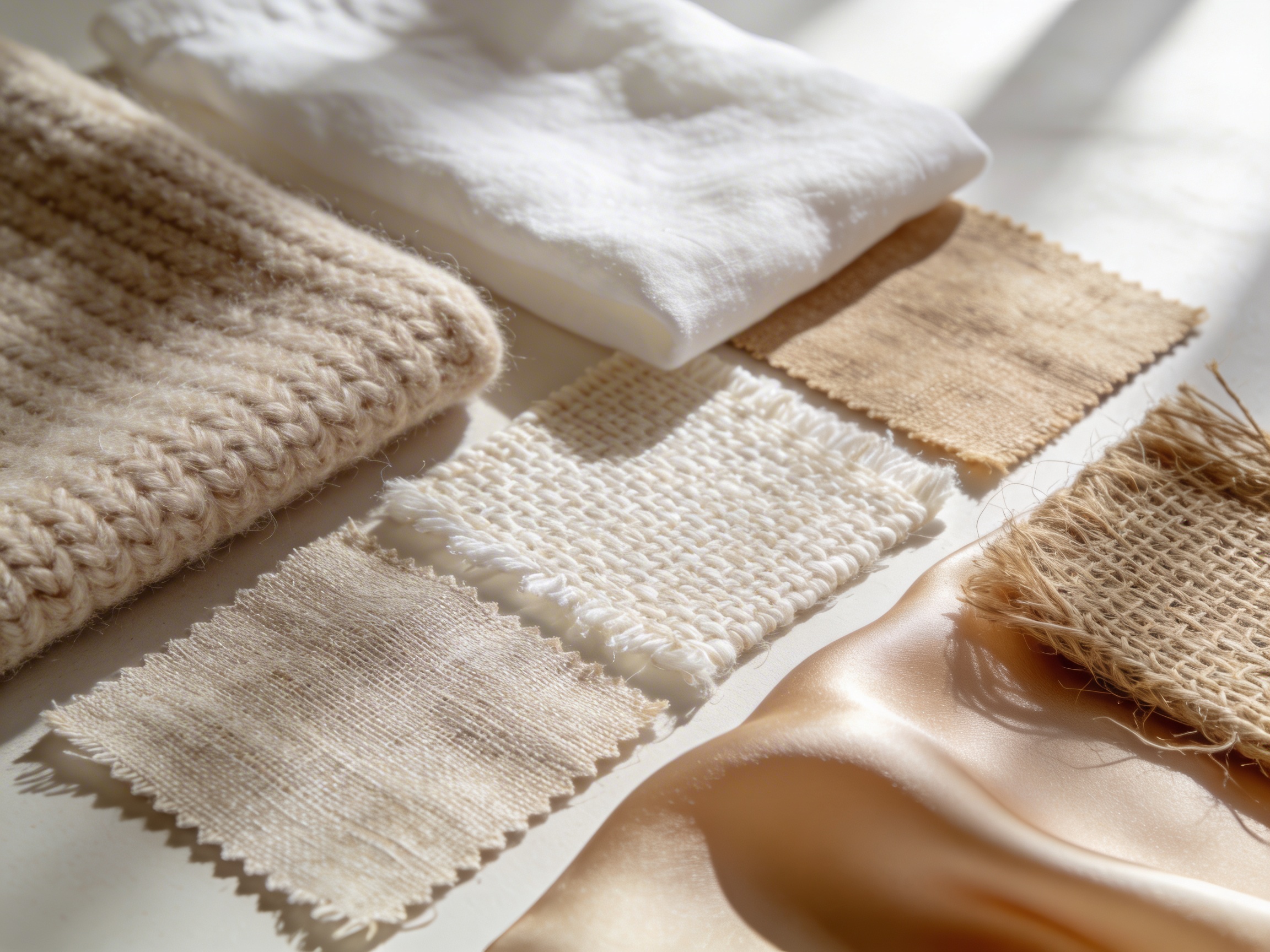

Natural fibers are not a monolithic category. Wool and cotton behave differently from linen and silk. Organic and conventional versions of the same fiber carry different chemical profiles. And “natural” on a label is not a regulated claim — it can describe a fiber that has been treated with a full suite of synthetic finishing chemicals. This is the guide that cuts through that noise.
Cotton: The Fiber Everyone Thinks They Understand
Cotton is the most widely worn natural fiber globally and also one of the most chemically processed. In conventional form, it carries pesticide residues from one of the most insecticide-intensive crops on earth, followed by bleaching, synthetic dyeing, and finishing treatments including wrinkle-resistance resins — typically formaldehyde-based — that bond to the fiber structure and are not fully removed by washing. The result is a garment that starts from a natural fiber but arrives at the consumer carrying a substantial synthetic chemical load.
GOTS-certified organic cotton addresses the agricultural stage — no synthetic pesticides, no prohibited processing chemistry, restricted dyeing and finishing — and is the gold standard for cotton. But even conventional cotton improves significantly if it carries OEKO-TEX Standard 100 certification on the finished garment, which tests for formaldehyde residues, azo dye breakdown products, pesticide residues, and heavy metals at the point of consumer contact. The absence of wrinkle-resistance, easy-care, and permanent-press claims on a cotton label is itself a meaningful signal — these finishes universally involve formaldehyde-based resins.
“Wrinkle-resistant, easy-care, and permanent-press cotton all use formaldehyde-based resins that bond to the fiber and are not removed by washing. These three label claims are the simplest proxies for formaldehyde exposure in your wardrobe.”
Wool: High Performance, Specific Concerns
Wool is one of the most sophisticated natural fibers available — naturally flame-resistant without chemical treatment, moisture-regulating in both directions (absorbing sweat and releasing it), naturally antimicrobial due to lanolin content, and durable across decades of careful use. For athletic and outdoor applications, fine merino wool performs comparably to synthetic base layers for temperature regulation and moisture management without the microplastic shedding or endocrine-relevant processing chemistry.
The primary health concern with commercial wool is superwash treatment. Machine-washable wool achieves its washability through a two-step process: chlorination of the fiber surface to remove the scale structure that causes felting, followed by polymer resin coating to smooth the fiber. The polymer coating is a synthetic addition that sheds microplastic fragments during washing — the opposite of what most people expect from a natural fiber. Untreated wool requires hand washing or gentle machine cycles but carries none of this synthetic addition. If the label says machine washable or superwash, the wool has been polymer-coated.
Linen: The Underrated Option
Linen, produced from flax fiber, requires significantly fewer agricultural inputs than cotton — flax grows without irrigation in most European climates and requires minimal pesticide application. The fiber processing involves retting (biological or chemical breakdown of the non-fiber stalk components), which in traditional water retting is entirely biological and produces no chemical residue. Linen has inherently low finishing chemistry requirements because its natural structure provides strength and drape without synthetic assistance.
Unbleached linen — the natural tan or grey color of undyed flax — carries the lowest finishing chemical load of any mainstream textile. Oxygen- or enzyme-bleached linen is the next cleanest option. Chlorine-bleached linen leaves halogenated residues in the fiber. For bedding and warm-weather clothing, linen is among the cleanest choices available at accessible price points. It softens progressively with washing and use — the stiffness of a new linen garment is a temporary property that improves with every wash cycle.
Silk: The High-End Consideration
Silk is a protein fiber — structurally more similar to human skin than plant-based fibers — with exceptionally smooth surface properties that minimize friction against skin and a natural temperature-regulating capacity that makes it comfortable across a wide ambient temperature range. Its health case for direct skin contact is strong: low allergenicity, no natural toxic compounds, and high breathability.
The concern with commercial silk is finishing chemistry. Silk is often weighted — treated with metallic salts historically, and with synthetic compounds in modern processing — to add body and drape. Weighted silk degrades more rapidly than pure silk and carries processing residues. OEKO-TEX Standard 100 certified silk, or silk sold as “pure” or “charmeuse” without weighting claims, is the cleaner option. For direct skin contact in sleepwear and bedding, silk provides a genuinely distinctive health and comfort profile that no synthetic substitute replicates.
Hemp: Low Input, Underavailable
Hemp fiber requires no pesticides in most growing conditions, requires significantly less water than cotton, and produces a durable, naturally antimicrobial fiber with a tensile strength greater than cotton. Its health profile as a textile is excellent — low processing chemistry requirements, no natural toxic compounds, high breathability. Its practical limitation is availability: finished hemp garments remain less accessible than cotton, wool, or linen alternatives, and the fiber quality across the current market varies more than established categories. Where accessible and price-competitive, it represents one of the cleanest fiber options available.
- Choose GOTS-certified organic cotton for the highest-contact garment categories. Underwear, sleepwear, and infant clothing in GOTS cotton is the highest-impact purchase decision in natural fiber textiles. It addresses agricultural chemistry, processing chemistry, and finishing chemistry in a single certification.
- Avoid wrinkle-resistant, easy-care, and permanent-press on any natural fiber label. These finishes use formaldehyde-based resins. Their absence is a meaningful proxy for a cleaner garment — look for the absence of these claims rather than the presence of “natural.”
- Specify non-superwash for any wool purchase. Machine-washable wool is polymer-coated wool. Untreated wool requires hand washing or gentle machine cycles but avoids the synthetic addition entirely and does not shed microplastics during washing.
- Choose unbleached or naturally dyed linen for warm-weather wear and bedding. Unbleached linen carries the lowest finishing chemical load of any mainstream textile. Where bleached linen is necessary, verify oxygen or enzyme bleaching rather than chlorine.
- Use OEKO-TEX Standard 100 as a minimum floor across all fiber types when GOTS is unavailable. OEKO-TEX tests the actual finished garment — a meaningful baseline for cotton, wool, silk, and linen regardless of organic certification status.
Natural fibers are not inherently safe and synthetic fibers are not inherently toxic — the meaningful distinctions are in the processing chemistry applied to both. Understanding those distinctions makes every textile purchase a more precise health decision, and makes the natural fiber category something more useful than a marketing designation.
When you look at the labels in your closet — how many of your “natural fiber” garments carry wrinkle-resistant or easy-care claims, and what does that mean for what you are wearing against your skin every day?