

Therapeutic Spaces · House Remedy
Cold water immersion has been a feature of health practice across cultures for millennia — from the Roman frigidarium to the Scandinavian practice of plunging into frozen lakes after sauna. What was once dismissed as folk wellness has now accumulated a research base substantial enough to demand serious attention. The more interesting question is no longer whether cold exposure works, but how to build it into a home that uses it daily.
What Cold Actually Does to the Body
The physiological response to cold water immersion is immediate, dramatic, and cascading. Within seconds of immersion in water below 59 degrees Fahrenheit, norepinephrine — both a stress hormone and a neurotransmitter — surges to two to three times above baseline. This produces the acute alertness and mood elevation that practitioners describe as one of its most immediately reinforcing effects. What is less commonly understood is that dopamine rises over the following hours at levels documented at up to 250 percent above baseline, with an effect duration that outlasts the immersion itself by several hours. This is not a spike and crash — it is a sustained neurochemical shift that distinguishes cold exposure from stimulants.
The vascular response is equally significant. Cold immersion triggers vasoconstriction — the narrowing of blood vessels at the periphery — followed by vasodilation upon exit. This cycle functions as a training stimulus for the smooth muscle tissue of blood vessel walls, improving vascular elasticity over time. Research published in the European Journal of Applied Physiology documents reductions in arterial stiffness with regular cold exposure, a metric directly associated with cardiovascular aging and long-term heart health.
The Inflammation Mechanism Most People Miss
Cold exposure’s anti-inflammatory effects are real but often misunderstood. The mechanism is not simply that cold reduces inflammation the way ice on a sprained ankle does. The more significant pathway is through the cold shock protein response — specifically the upregulation of RNA-binding proteins that stabilize messenger RNA and reduce the translation of inflammatory cytokines. This is a systemic effect, not a local one, and it is why regular cold exposure has been associated in research with reductions in markers like CRP and IL-6 — the same inflammatory proteins implicated in cardiovascular disease, metabolic dysfunction, and accelerated neurological aging.
There is also a hormetic dimension worth understanding. Cold exposure is a controlled stressor — it activates the same adaptive pathways as exercise and intermittent fasting. The body’s response to manageable stress is to upregulate its own repair and resilience mechanisms. A cold plunge that feels genuinely uncomfortable is, by definition, working. The discomfort is the signal, not a side effect.
Brown Fat Activation and Metabolic Effects
One of the more surprising findings from cold exposure research involves brown adipose tissue — a metabolically active fat that generates heat by burning energy rather than storing it. Unlike white adipose tissue, brown fat is thermogenic and its activation is triggered by cold. Studies using PET scanning have documented significant increases in brown fat activity with regular cold exposure, with associated increases in basal metabolic rate and improvements in insulin sensitivity. In populations with higher brown fat activation, researchers have observed more favorable glucose metabolism — a connection that positions cold exposure as a genuine metabolic intervention, not merely a recovery tool.
Designing the Cold Plunge Into Your Home
The single most important design principle for a home cold plunge is accessibility. Research on behavioral consistency shows that the barrier to entry — how many steps it takes to begin — predicts long-term adherence more reliably than motivation. A cold plunge in a dedicated wellness room that requires walking through the house, unlocking a door, and changing clothes will be used far less than one positioned immediately adjacent to a shower or sauna.
The optimal temperature range for physiological benefit is 50 to 59 degrees Fahrenheit, sustained for two to four minutes. Below this range the risk of cold shock increases without proportional benefit. Above it, the neurochemical and vascular responses are attenuated. A quality chiller unit that maintains this range precisely — rather than relying on ice or fluctuating tap water — is worth the investment for consistency of effect.
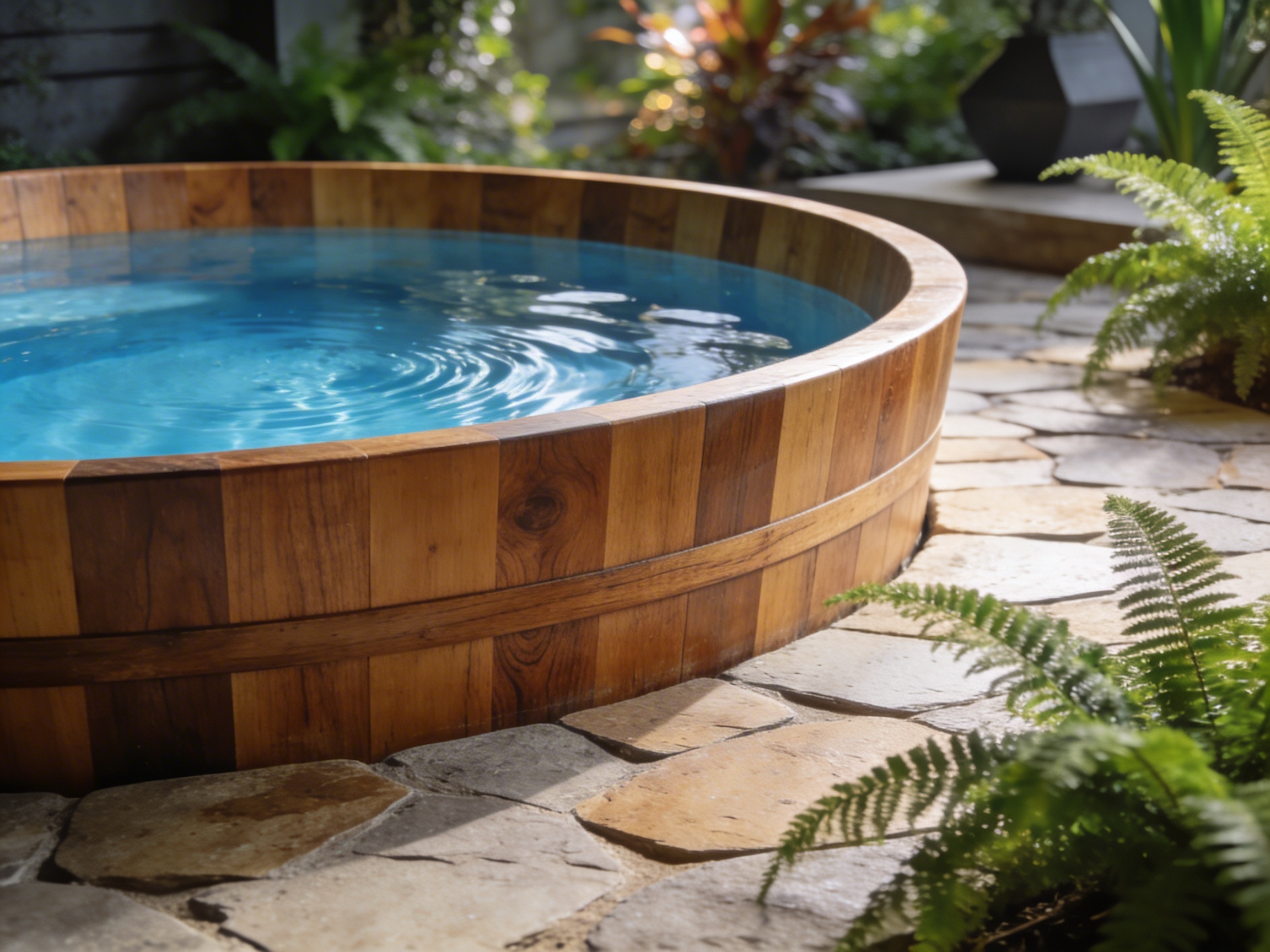
Cedar and teak are the preferred materials for surrounding structures — both handle moisture cycling without warping, mold, or off-gassing, which is a genuine concern in a space that will be perpetually wet. A non-porous surround surface like large-format porcelain is preferable to grout-heavy tile, which accumulates biofilm in the grout lines over time regardless of cleaning frequency.
Pairing Cold with Heat: The Contrast Protocol
The research on contrast therapy — alternating between heat and cold — shows effects that exceed either modality used alone. The mechanisms are complementary: heat drives vasodilation, lymphatic circulation, and heat shock protein production; cold drives vasoconstriction, norepinephrine release, and cold shock protein activation. Cycling between the two creates a vascular pumping effect that accelerates metabolic waste clearance and produces the sustained mood elevation documented in Scandinavian sauna research.
The practical protocol most supported by research: three to four minutes of sauna at 170 to 190 degrees Fahrenheit, followed immediately by two to three minutes of cold immersion, repeated two to three cycles. The cold ends the sequence — exiting cold rather than warm preserves the norepinephrine and dopamine elevation for the hours that follow rather than dissipating it through post-heat relaxation.
Where to start
- Start with a cold shower finish, not a full plunge. Two minutes of cold water at the end of your shower activates the same norepinephrine response and builds the cold tolerance that makes a plunge sustainable. Do this for two weeks before investing in a dedicated unit.
- Position the plunge adjacent to your shower or sauna. Accessibility predicts adherence more reliably than motivation. Every additional step between you and the plunge reduces the likelihood you use it.
- Invest in a quality chiller that holds 50 to 59 degrees Fahrenheit precisely. Consistency of temperature produces consistency of effect. Ice baths and cold tap water fluctuate too much to deliver reliable results.
- Use cedar, teak, or large-format porcelain for surrounding surfaces. Avoid grout-heavy tile in the wet surround — it accumulates biofilm faster than any other surface in a perpetually wet environment.
- End your contrast sessions cold, not warm. Finishing in the cold preserves the dopamine and norepinephrine elevation for the hours that follow rather than dissipating it through post-heat relaxation.
A well-designed cold plunge is not a luxury feature — it is a daily physiological intervention with a research base that rivals most pharmaceutical approaches to mood, inflammation, and metabolic health. The difference between a cold plunge that gets used and one that collects dust is almost always design and placement, not intention. Build it into the home in a way that removes friction entirely, and the practice becomes as automatic as a morning shower — which, for many practitioners, it eventually replaces.
Have you experimented with cold exposure — and if so, what format works best in your daily routine?