

Food & Nutrition · House Remedy
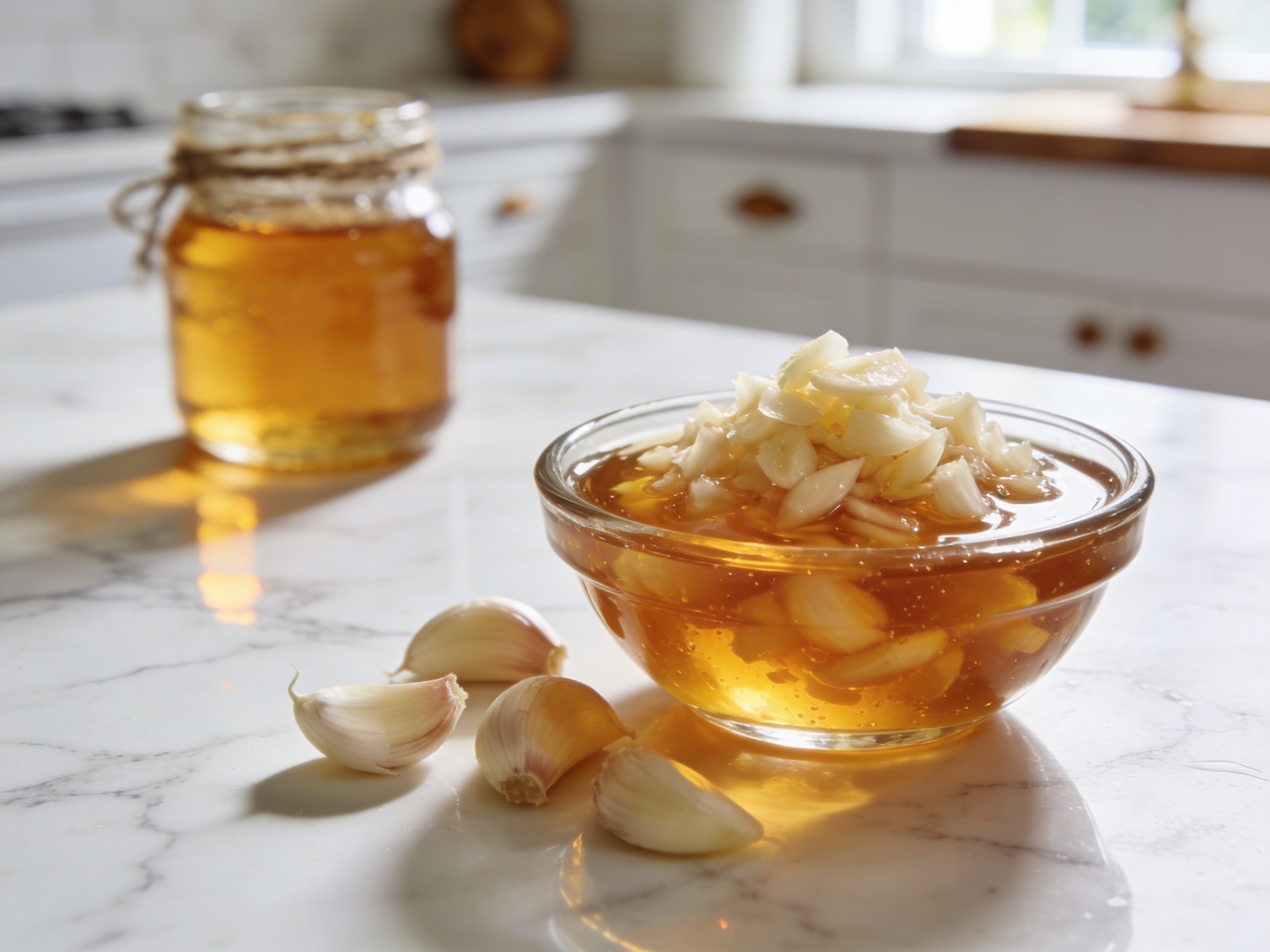
There is a preparation so simple it barely qualifies as a recipe — crushed raw garlic mixed into raw honey and consumed within minutes. No fermentation, no waiting, no special equipment. What makes this combination worth understanding is not tradition or trend but biochemistry: the active compounds in fresh-crushed garlic and raw unpasteurized honey interact with the body through specific, documented pathways that include crossing the blood-brain barrier, suppressing pathogenic microorganisms, supporting immune signaling, and protecting neural tissue from oxidative damage. The science behind this preparation is deeper and more precise than most people expect.
What Happens When You Crush a Garlic Clove
Intact garlic contains a sulfur-containing amino acid called alliin and an enzyme called alliinase, stored in separate cellular compartments. When the clove is crushed, chopped, or chewed, the cell walls break and these two compounds meet. Alliinase converts alliin into allicin — a highly reactive organosulfur compound responsible for garlic’s pungent smell and nearly all of its documented antimicrobial, antifungal, and neuroprotective activity. This conversion is not instantaneous. It takes approximately ten minutes of air exposure after crushing for allicin production to reach its peak. This is why the preparation matters: a garlic clove swallowed whole produces almost no allicin, and garlic cooked immediately after chopping produces significantly less, because heat deactivates alliinase before the conversion is complete.
The ten-minute rule is the single most important practical detail in garlic nutrition. Crush or finely chop the garlic, let it sit exposed to air for ten minutes, and then consume it raw or add it to food after cooking. This maximizes allicin formation and preserves the compound that drives every health benefit discussed in this article.
Allicin Crosses the Blood-Brain Barrier
The blood-brain barrier (BBB) is one of the body’s most selective gatekeepers — a tightly sealed layer of endothelial cells that lines the blood vessels of the brain, preventing most substances in the bloodstream from reaching neural tissue. It exists to protect the brain from toxins, pathogens, and fluctuations in blood chemistry. The vast majority of compounds you consume never cross it. Allicin does.
Allicin is a small lipophilic molecule — fat-soluble, low molecular weight, and with a topological polar surface area of approximately 62 angstroms, well within the range that predicts BBB penetration. In computational pharmacokinetic modeling, allicin’s logBB value exceeds 0.3, a threshold that indicates ease of brain penetration. In laboratory studies using human brain endothelial cells (the hCMEC/D3 model, a standard in vitro BBB model), these cells completely absorbed allicin at relevant concentrations within thirty minutes. The research describes allicin as a compound that can “easily cross the blood-brain barrier to immediately interact with other biologically active compounds to form many beneficial metabolites.”
This is not a theoretical property. In animal models, allicin pretreatment before induced ischemic stroke significantly reduced stroke size, decreased brain edema, protected blood-brain barrier integrity, and reduced neuronal death. The mechanism involves multiple simultaneous actions: allicin suppressed oxidative stress by increasing the activity of the body’s own antioxidant enzymes — superoxide dismutase (SOD), catalase, and glutathione peroxidase. It reduced neuroinflammation by suppressing pro-inflammatory cytokines including TNF-alpha and interleukin-6. And it inhibited neuronal apoptosis — programmed cell death — in damaged tissue.
The BDNF Pathway: How Garlic Supports Brain Resilience
One of the most compelling recent findings in garlic neuroscience involves the PKA/p-CREB/BDNF signaling pathway. BDNF — brain-derived neurotrophic factor — is a protein that supports the survival of existing neurons, promotes the growth of new neurons and synapses, and is critical for learning, memory, and long-term cognitive function. Low BDNF levels are consistently associated with depression, Alzheimer’s disease, and accelerated cognitive decline.
In a 2025 study using a Parkinson’s disease mouse model, allicin activated the PKA/p-CREB/BDNF pathway, restored dopamine transporter levels, and significantly attenuated the loss of dopaminergic neurons — the neurons whose destruction is the hallmark of Parkinson’s disease. The researchers described this as the first experimental validation of allicin’s neuroprotective effects through this specific signaling cascade. In practical terms, a compound found in crushed garlic activates one of the brain’s most important pathways for neuronal survival and repair — and it reaches the brain because it crosses the blood-brain barrier.
S-allyl cysteine (SAC), another garlic-derived compound found especially in aged garlic extract, also crosses the blood-brain barrier and shows similar neuroprotective effects through antioxidant and anti-inflammatory mechanisms. And a lesser-known compound called FruArg (N-alpha-(1-deoxy-D-fructos-1-yl)-L-arginine) has been detected crossing the BBB in mice at subnanomolar concentrations — demonstrating that garlic’s neuroprotective reach extends beyond allicin alone.
What Raw Honey Brings to the Combination
Raw, unpasteurized honey is not a simple sweetener. It is a bioactive substance containing enzymes, antioxidants, polyphenols, hydrogen peroxide, and prebiotic oligosaccharides — all of which are destroyed or significantly reduced by the heat processing used in most commercial honey. Understanding what raw honey actually contains explains why it is not interchangeable with processed honey in this preparation.
The most important enzyme is glucose oxidase, added by bees during nectar processing. When raw honey is diluted — as it is when mixed with saliva and gastric fluids — glucose oxidase becomes active and converts glucose into gluconic acid and hydrogen peroxide. This is the primary mechanism behind honey’s antimicrobial properties. Unlike the harsh hydrogen peroxide in a bottle from the pharmacy, honey produces a slow, sustained, low-concentration release that provides antimicrobial action without damaging tissue. Raw honey also contains invertase (which breaks sucrose into glucose and fructose), diastase (which breaks down complex carbohydrates), catalase (which regulates hydrogen peroxide levels), and a suite of flavonoids and phenolic acids with documented antioxidant activity.
The prebiotic oligosaccharides in raw honey specifically promote the growth of Lactobacilli and Bifidobacteria in the gut — two bacterial genera consistently associated with reduced inflammation, stronger immune function, and better intestinal barrier integrity. This means that even when consumed as a vehicle for garlic, raw honey is actively supporting the gut microbiome in the same direction as the garlic’s own antimicrobial and prebiotic effects. The two substances do not merely coexist in the spoon. They complement each other through parallel and reinforcing mechanisms.
There is also a practical benefit: raw honey makes raw garlic significantly more palatable. The sweetness and viscosity of honey buffer the intensity of fresh allicin, making it possible to consume a meaningful amount of raw garlic daily without the burning sensation that discourages most people from sustaining the practice.
Why Immediate Consumption — Not Fermentation
Fermented garlic in honey is a separate preparation with its own merits — the lacto-fermentation process creates probiotics and extends shelf life. But the preparation described here is different and has a different purpose. When garlic is crushed and mixed with raw honey and consumed within minutes, you are delivering peak allicin concentration — the highest level of the most biologically active compound, at its most reactive and most available for absorption. Allicin is inherently unstable and begins breaking down into secondary sulfur compounds (diallyl disulfide, diallyl trisulfide, ajoene) within hours. These breakdown products have their own health benefits, but they are different from allicin itself. If maximum allicin delivery to the bloodstream — and by extension to the brain — is the goal, immediate consumption of freshly crushed garlic is the preparation that achieves it.
The honey in this preparation serves three simultaneous roles: it provides its own antimicrobial and prebiotic compounds, it buffers the raw garlic for palatability, and it contributes antioxidant polyphenols that may support the same oxidative-stress pathways that allicin acts on in the brain. This is not a folk remedy dressed in science. It is two well-researched bioactive substances consumed together in the form that preserves their most potent compounds.
The Antimicrobial Spectrum: What This Combination Fights
The antimicrobial reach of allicin alone is broad enough to warrant attention. It has demonstrated activity against Gram-positive and Gram-negative bacteria including Staphylococcus, Streptococcus, Listeria, Salmonella, E. coli (including multidrug-resistant strains), Helicobacter pylori, Klebsiella, and Pseudomonas. It is effective against fungal pathogens including Candida albicans and Aspergillus. It has antiparasitic activity against Giardia lamblia and Entamoeba histolytica. And it has demonstrated antiviral activity against influenza viruses. The primary mechanism is allicin’s reactivity with thiol groups on essential microbial enzymes — it disrupts the metabolic machinery that bacteria and fungi depend on for survival.
Raw honey adds its own antimicrobial layer: hydrogen peroxide production, low pH, high osmolarity (which dehydrates microbial cells), phenolic compounds, and in some varieties like Manuka, methylglyoxal — a non-peroxide antimicrobial compound. Research on the combination of garlic and honey has shown enhanced antimicrobial activity compared to either substance alone, including effectiveness against multiresistant pathogens. The synergy is not just additive — the two substances attack microbial cells through different mechanisms simultaneously, making resistance development less likely.
How to Prepare and Consume It
The preparation is simple, but the details matter for potency. Take one to two cloves of fresh garlic. Crush or finely mince them — the more thoroughly the cell walls are broken, the more allicin is produced. Let the crushed garlic sit exposed to air for ten minutes. This is non-negotiable for maximum allicin formation. After ten minutes, mix the garlic into one to two teaspoons of raw, unpasteurized honey. Consume immediately — do not store it, do not heat it, do not cook with it. The goal is to deliver peak allicin and active honey enzymes together, before either compound begins to degrade.
Timing also matters. Taking this on an empty stomach may cause gastric irritation for some people. Taking it with or just before a meal provides a food buffer and also means the garlic enters the digestive tract alongside other nutrients that support absorption. Morning consumption aligns with the body’s natural cortisol peak and immune activity cycle, though there is no research indicating a specific time of day is significantly better than another. The more important variable is consistency — the neuroprotective, antimicrobial, and immune-supporting effects of garlic are cumulative and dose-dependent, meaning daily consumption over weeks produces effects that occasional use does not.
One important note: raw honey should never be given to children under one year of age due to the risk of infant botulism. And individuals taking anticoagulant medications should consult their doctor before significantly increasing raw garlic intake, as allicin has documented blood-thinning properties.
Where To Start
- Start with one clove daily. Crush a single garlic clove, wait ten minutes, mix into a teaspoon of raw honey, and consume. The ten-minute wait is what makes the difference — it allows the alliin-to-allicin conversion to reach full capacity. Build up to two cloves over a week or two as your body adjusts.
- Use only raw, unpasteurized honey. Processed honey has had its glucose oxidase, invertase, and polyphenols destroyed by heat. The label should specifically say “raw” — if it does not, assume it has been heated. Darker honeys (buckwheat, wildflower) tend to have higher antioxidant content and stronger antimicrobial activity.
- Consume with or just before a meal. This reduces the likelihood of gastric irritation while allowing the garlic and honey compounds to enter the digestive tract alongside other nutrients. Morning consumption aligns with natural immune activity, but consistency matters more than timing.
- Make it a daily practice, not an occasional remedy. The neuroprotective effects — BDNF pathway activation, antioxidant enzyme upregulation, anti-inflammatory action in the brain — are cumulative. A single dose may have acute antimicrobial effects, but the deeper benefits emerge with sustained, regular intake over weeks.
- Source fresh, firm garlic and store it properly. Old, soft, or sprouting garlic contains less alliin and produces less allicin. Buy whole heads, store at room temperature in a dry place with air circulation, and use within a few weeks. Pre-minced garlic in jars has minimal allicin activity and is not a substitute for fresh.
A spoonful of crushed garlic in raw honey is not a dramatic intervention. It does not taste dramatic, it does not require a prescription, and it does not cost more than a few cents a day. But the biochemistry is real and increasingly well documented: a compound that crosses the blood-brain barrier, activates neuroprotective signaling, fights a broad spectrum of pathogens, and supports the gut microbiome — delivered in a preparation that takes sixty seconds to make and pairs with a substance that reinforces each of those mechanisms through its own parallel pathways. The simplest preparations are sometimes the ones with the most science behind them.
Have you ever tried raw garlic in honey — and if not, what are you waiting for?