

The gym is a modern solution to a modern problem: the systematic removal of physical demand from daily life. The research on exercise is robust and important — but the research on incidental movement, the kind embedded in environments that require physical engagement throughout the day, shows something the gym cannot replicate. It is not intensity that predicts longevity most strongly. It is frequency of low-level movement across the full waking day.
NEAT: The Metric That Changes Everything
Non-exercise activity thermogenesis — NEAT — is the energy expended in all physical activity outside of formal exercise: walking, standing, carrying, fidgeting, climbing stairs, gardening, cooking. Research by endocrinologist James Levine at the Mayo Clinic established that NEAT varies by up to 2,000 calories per day between individuals at similar body weights, and that this variation is the primary driver of metabolic health differences between sedentary and active people — not their gym attendance.
The implication is significant. An hour of structured exercise does not compensate for eight hours of sitting, because those eight hours of inactivity suppress lipoprotein lipase activity, reduce glucose uptake, and maintain the low metabolic rate of sedentary tissue regardless of what happened in the gym. The home environment — how it is designed, how it demands or removes physical effort from daily life — is the primary determinant of your NEAT, and therefore of your baseline metabolic health.
“NEAT varies by up to 2,000 calories per day between individuals. An hour of gym exercise does not compensate for eight hours of sitting — and the design of your home determines more of that equation than your gym membership does.”
Designing Physical Demand Back Into Your Home
The modern home is optimized for frictionlessness — single-story layouts, remote controls, dishwashers, elevators, garages that open into kitchens, everything within arm’s reach. Each convenience removes a physical demand that, accumulated across a day, represents meaningful movement. Reversing this deliberately is not about making life harder. It is about recovering movement that was systematically engineered out of domestic life over the past fifty years.
Stairs are the simplest and most powerful example. A home with a second floor and no elevator alternative creates stair climbing as an unavoidable daily behavior — a movement that loads the cardiovascular system, activates the posterior chain, and requires balance and proprioception in ways that walking on flat surfaces does not. If you live in a single-story home, a step platform at the kitchen sink or desk creates the same stimulus during otherwise stationary tasks. The specific location does not matter; the daily repetition does.
Floor living — the practice of sitting, eating, reading, and resting on the floor rather than exclusively in furniture — is common in Okinawan and Japanese households and produces the daily hip flexor mobilization, ground-level transitions, and active sitting posture that chairs eliminate. A single floor cushion in a living room is not an aesthetic choice — it is an invitation to a movement pattern that maintains the hip mobility and lower limb strength that predict functional independence in older age. The ability to sit and rise from the floor without using hands has been shown in prospective studies to predict all-cause mortality.
The Home Fitness Environment: What Actually Works
The research on home fitness equipment is unambiguous in one direction: equipment that is visible, accessible, and requires no setup is used. Equipment stored in a garage, folded into a closet, or requiring assembly before use is not. The barrier to exercise does not need to be large to be effective at preventing it — even a thirty-second setup process reduces adherence significantly in real-world conditions.
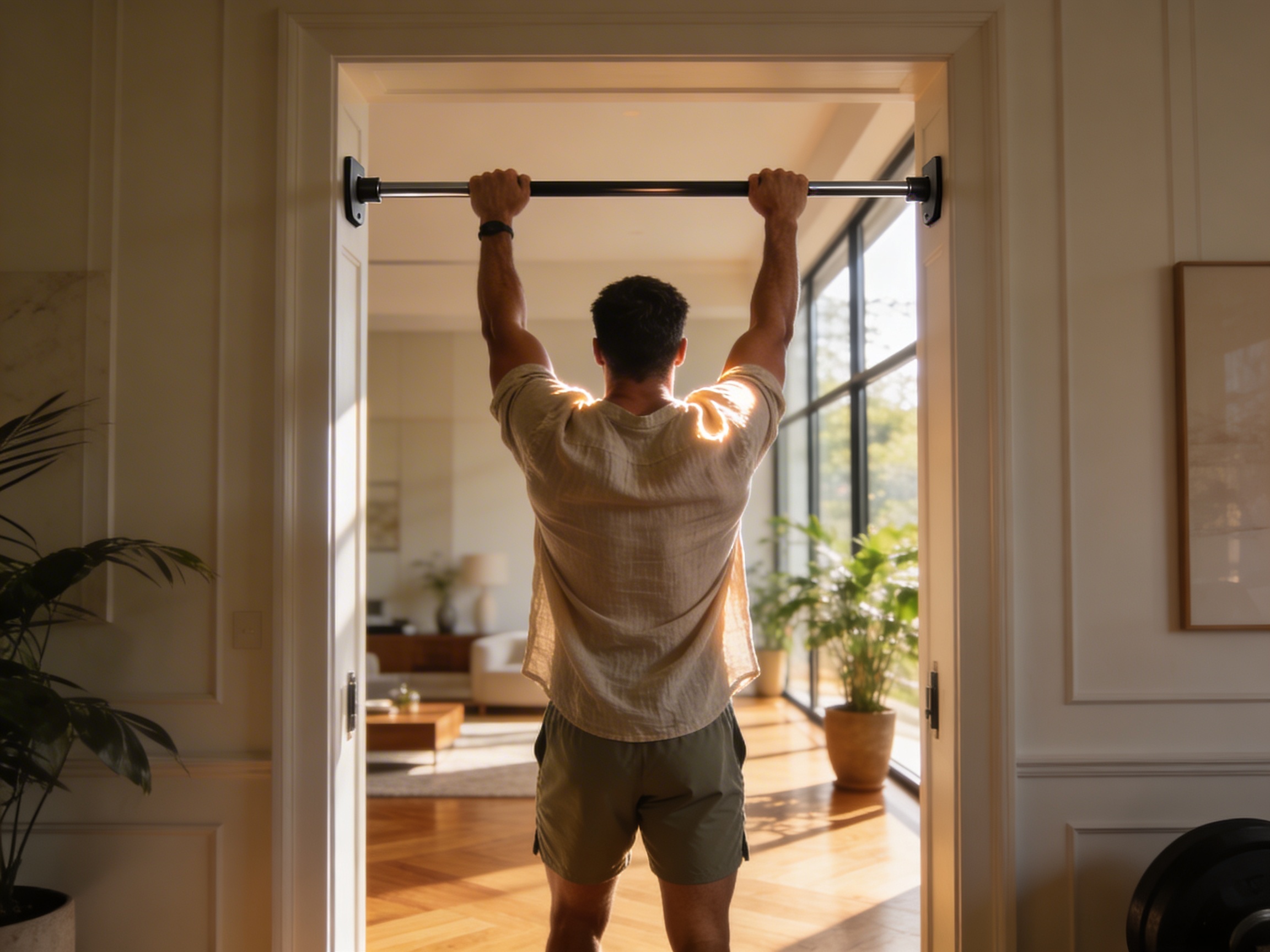
A pull-up bar in a doorframe used twenty times per week adds up to more upper body strength work than most gym goers achieve in formal sessions. A set of kettlebells on a shelf in a visible, accessible location becomes a movement invitation rather than a commitment requiring transportation, parking, and scheduling. A jump rope hung by the back door adds a cardiovascular option that requires no equipment beyond itself. The home fitness environment that works long-term is one that lowers activation energy to near zero for a small number of versatile tools — not one that replicates a commercial gym.
The Walking Infrastructure of Your Home
The layout of your home and its relationship to its outdoor environment determines how much you walk. Homes with accessible outdoor spaces — a garden, a porch, a walkable neighborhood — produce more ambient walking than homes designed as interior-only environments. The single most effective home design choice for NEAT is placing the things you use most at the furthest point from where you spend most of your time — not as a punishment, but as a built-in movement stimulus.
For home office workers, this means placing the kitchen on a different floor from the workspace, using a printer that requires walking to retrieve, taking outdoor walking calls rather than sitting calls, and designing the lunch break as a walk rather than a desk activity. These are not time costs — they are time substitutions that produce physiological benefits that hours of sedentary work cannot offset.
- Add one floor cushion to your primary living space and use it daily. Sitting, reading, or watching from the floor requires ground-level transitions that maintain hip flexor mobility, ankle dorsiflexion, and the lower limb strength that chairs progressively erode. This costs nothing and takes one square foot of space.
- Install a pull-up bar in a high-traffic doorframe. Visible, zero setup, zero floor space. Used five to ten times per day in passing — a greeting-card moment of upper body work — it accumulates to more pulling volume per week than most structured programs deliver.
- Place your most-used items furthest from where you sit. Water in the kitchen when you work in the office. Charger across the room from the couch. Phone on a different floor from your workspace. These small architectural frictions add up to hundreds of additional daily steps with zero additional time commitment.
- Take at least one daily call or meeting as a walk. Walking calls require no scheduling change — they substitute movement for sitting during time already allocated to work. Twenty minutes of walking per call, four calls per week, adds over an hour of moderate-intensity movement to the week with no additional time cost.
- Keep one piece of equipment visible and deployment-ready in your primary living space. A kettlebell on a shelf, a resistance band on a hook, a jump rope by the door. The barrier is activation energy — reduce it to zero and the equipment gets used. Store it away and it becomes decoration.
The home that supports lifelong fitness is not a home gym. It is a home designed to make stillness slightly inconvenient and movement slightly inevitable — through layout, through the placement of objects, through the presence of outdoor spaces that invite use, and through the removal of automations that replaced physical effort with convenience. The gym addresses intensity. The home addresses frequency. And frequency, at low intensity, sustained across decades, is what the longevity data actually rewards.
If your home were designed to make movement inevitable rather than optional — what is the one thing you would change about its layout or the placement of objects in it?