
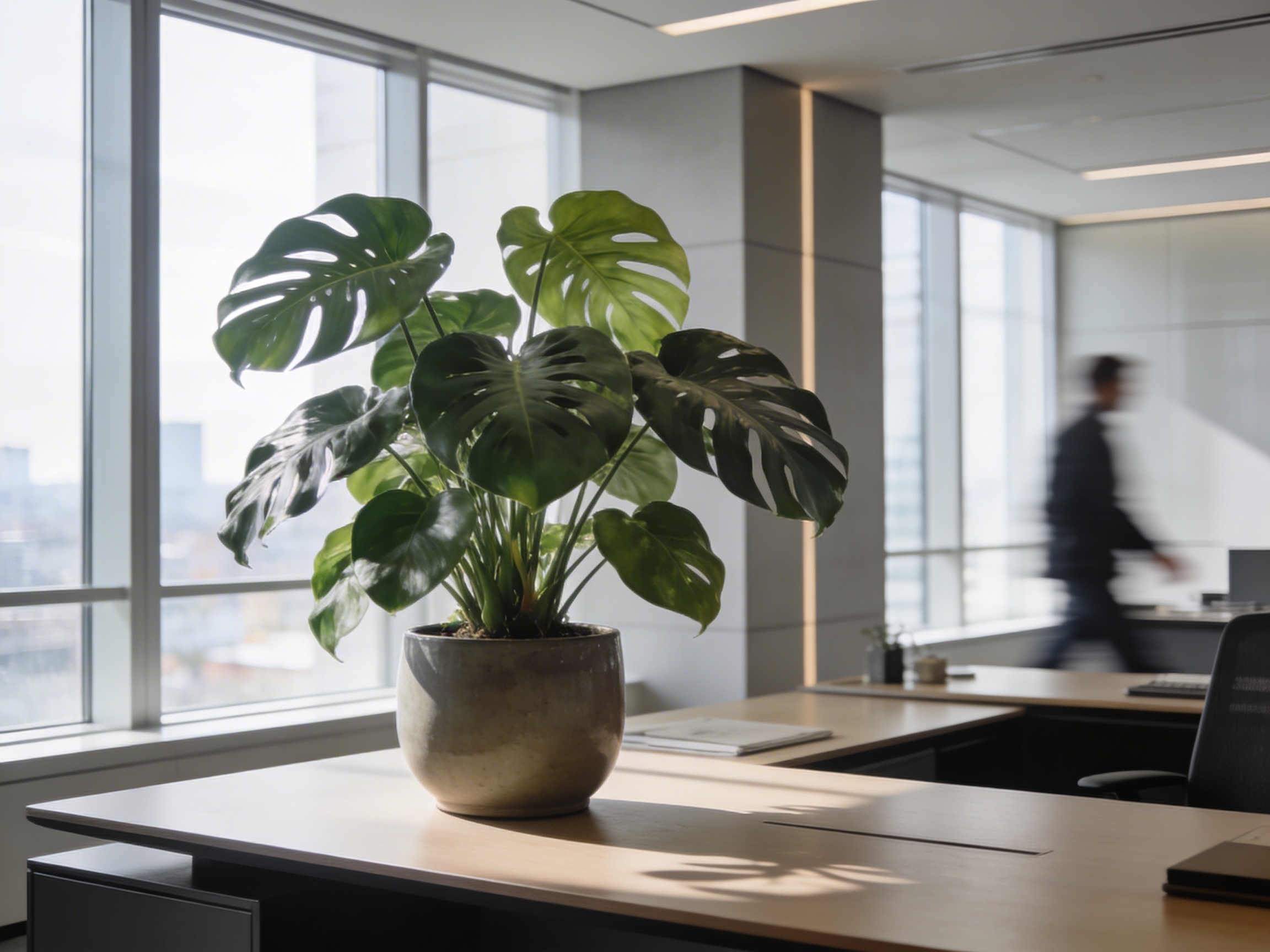

The office is not typically listed alongside construction sites as a high-exposure work environment. It should be. The average office worker spends eight or more hours per day in a sealed, climate-controlled building with recirculated air, synthetic materials off-gassing at close range, and a light environment that systematically disrupts circadian biology. The exposure profile is different from the trades — lower in acute toxicity, higher in chronic subtlety — and it is almost never discussed.
The Sealed Building Problem
Modern commercial buildings are designed for energy efficiency, which means minimizing air exchange. Whatever off-gases inside — from carpet adhesives, composite wood furniture, printer toner, cleaning products, and building materials — accumulates at concentrations that would be diluted to near-zero in a naturally ventilated space. The EPA has documented that indoor air in commercial buildings is frequently two to five times more polluted than outdoor air in the same location, and in some cases up to 100 times more so. The primary VOC sources in a typical office are: carpet and carpet adhesive off-gassing styrene and 4-phenylcyclohexene; composite wood furniture off-gassing formaldehyde; laser printers and copiers generating ultrafine particles and benzene during operation; and cleaning products leaving peak VOC residues each morning when workers arrive.
“The EPA has documented that indoor air in commercial buildings is frequently two to five times more polluted than outdoor air — and in some cases up to 100 times more so.”
Sick Building Syndrome: Real, Underdiagnosed, and Fixable
Sick Building Syndrome is a recognized occupational health condition documented by the WHO, NIOSH, and the EPA. It describes acute health effects — headaches, fatigue, eye and throat irritation, cognitive fog — that are temporally linked to time in a specific building and resolve on departure. Studies of SBS prevalence consistently find that 20–30% of new and remodeled buildings generate occupant complaints meeting SBS criteria. Risk factors are well-established: sealed mechanical ventilation without adequate fresh air supply, recent renovation, carpet presence, copy machine proximity, and inadequate humidity control promoting mold growth in HVAC systems.
The Circadian Light Injury of Office Work
Open-plan offices and interior workstations frequently have no access to natural daylight. A worker who commutes before sunrise, works in an interior office, and leaves after sunset may go the entire workday without meaningful natural light — receiving instead continuous artificial light at 3500–5000K. The circadian consequence is suppression of morning cortisol rise, disruption of afternoon melatonin onset, and systematic degradation of sleep architecture. Chronic circadian disruption is associated with increased risk of metabolic syndrome, cardiovascular disease, depression, and certain cancers. Proximity to a window is not an aesthetic workplace preference. It is a health variable.
The Sedentary Posture Load
Prolonged sitting produces physiological effects distinct from and additive to insufficient overall activity. Extended sitting compresses intervertebral discs, activates hip flexors isometrically while inhibiting glutes, and eliminates the low-grade muscular activity that normally regulates blood glucose and lipid clearance throughout the day. Studies show that even people who meet exercise guidelines but sit eight or more hours per day have elevated metabolic and cardiovascular risk profiles. The intervention is not a standing desk — it is frequent position change every 30 minutes, maintaining the muscular activity that regulates metabolic function.
- Sit as close to a window as possible and face it. Daylight at the retina is the primary circadian signal. Even indirect natural light is dramatically more effective than any artificial source at maintaining circadian alignment across the workday.
- Take lunch outside every day. Twenty minutes of outdoor midday light maintains the circadian amplitude that supports alertness and evening melatonin onset — and gives your lungs a break from the indoor air environment.
- Move for two minutes every 30 minutes. Stand, walk to a colleague, take stairs. The goal is breaking the static posture load — two minutes of light activity every 30 minutes produces measurable improvements in blood glucose and lipid regulation.
- Position your desk away from shared printers and copiers. These generate ultrafine particles and VOCs during operation. Distance is the most effective intervention when ventilation is fixed.
- Bring a small desktop HEPA purifier to your workspace. A HEPA unit at desk level captures particulate from the air volume you are actually breathing — regardless of what the central HVAC is or is not doing.
The office is not benign simply because it involves no heavy machinery and no chemical warning labels. Its exposures are subtler, its effects slower, and its cumulative impact across a working life no less real. The home environment is where recovery from those exposures happens — or fails to. Understanding the office as an exposure environment is the first step toward ensuring recovery actually occurs.
If your office has no windows near your desk — have you ever considered that its light environment might be the primary driver of your chronic afternoon fatigue?