
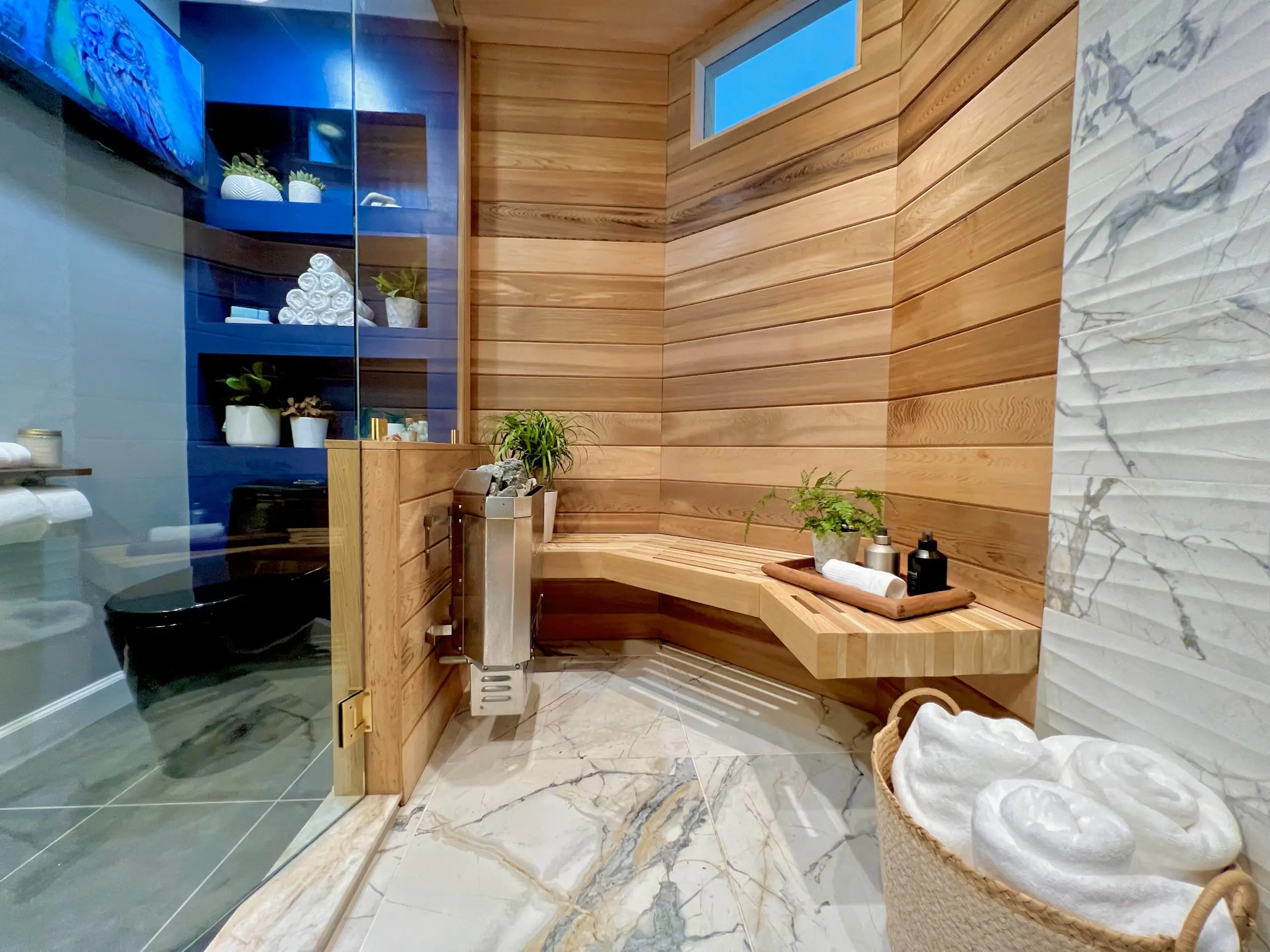

The sauna has been a feature of Finnish domestic life for over two thousand years. The Finnish relationship with the sauna is cultural, social, and deeply practical — it is where babies were traditionally born, where the ill were brought to rest, and where the healthy gathered to maintain the wellbeing that cold winters and physical labor demanded. What the Finnish population has known empirically for centuries, longevity science has spent the last three decades documenting with increasing rigor.
The most significant body of sauna research comes from the University of Eastern Finland’s long-running cohort studies, which have followed thousands of middle-aged Finnish men and women over periods of up to twenty years. Regular sauna use — four to seven times per week for sessions of 20 minutes at temperatures between 176 and 212 degrees Fahrenheit — was associated with a 40% reduction in all-cause mortality, a 50% reduction in fatal cardiovascular disease events, and a dose-dependent reduction in the risk of dementia and Alzheimer’s disease. These effect sizes are comparable to or exceeding those of the most widely recommended lifestyle interventions in preventive medicine.
The physiological mechanisms behind these outcomes are multiple and well characterized. Repeated heat exposure trains the cardiovascular system in a manner analogous to aerobic exercise. Heat shock proteins — molecular chaperones that repair damaged and misfolded proteins — are upregulated significantly during heat exposure and remain elevated for hours afterward, providing a cellular repair stimulus with direct implications for cellular aging and neurodegenerative disease. Growth hormone is released during sauna sessions at levels that rival the response to intense physical exercise, supporting tissue repair, lean muscle maintenance, and metabolic health. And the parasympathetic activation that occurs during the relaxation phase measurably reduces cortisol, blood pressure, and markers of systemic inflammation.
For home integration, the sauna presents design challenges solved differently at different scales and budgets. A traditional Finnish sauna — a cedar-lined room with a kiuas stove and stone heating element — is the gold standard and the form the research literature has primarily studied. Infrared saunas operate at lower temperatures, use less electricity, and require less structural modification, making them more accessible in spaces where traditional sauna infrastructure requirements are prohibitive.
The sauna is one of the most evidence-rich wellness investments available to a homeowner. The question is not whether its benefits are real — the research has answered that — but how to design it into a home in a way that encourages daily use, because the benefits documented in the research are dose-dependent. Designing it as a natural extension of the bathing and recovery ritual of daily life is the design decision that determines whether the investment produces the health outcomes the research documents.