
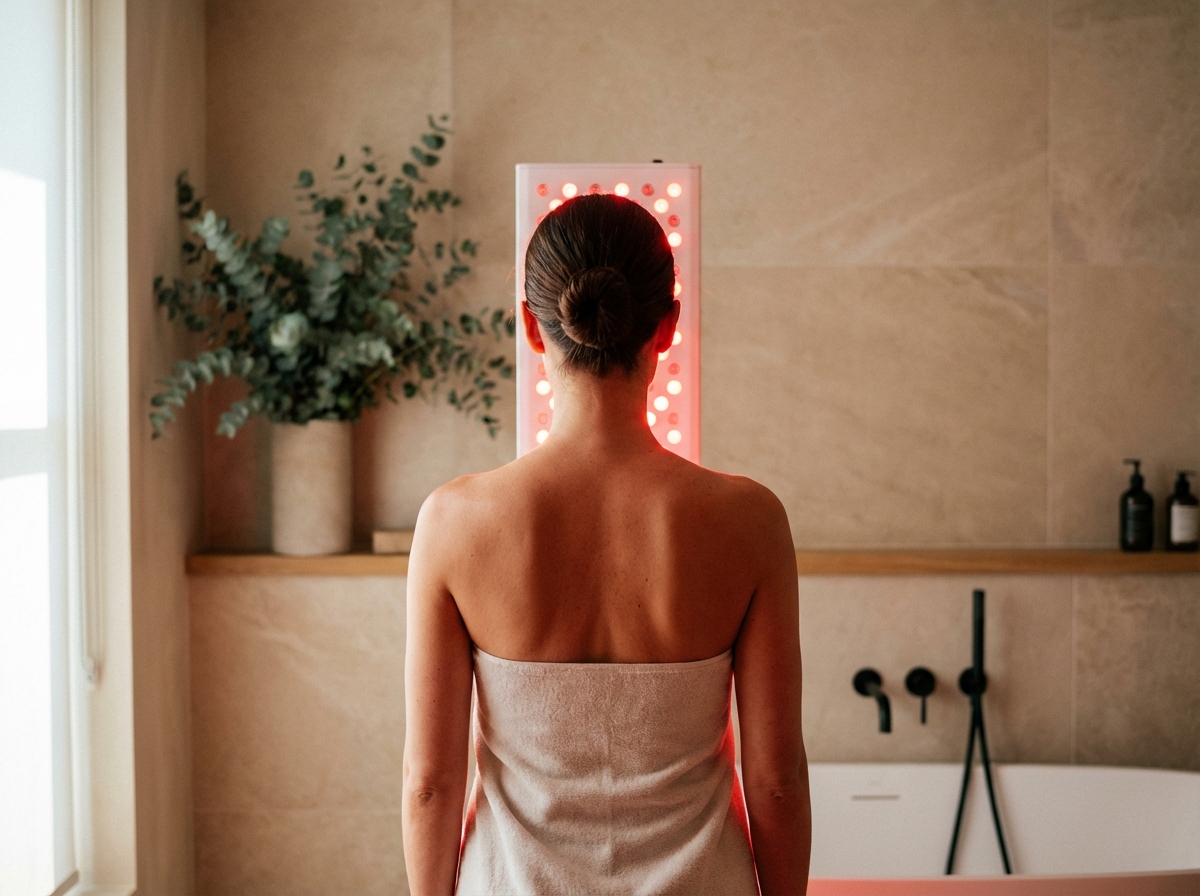

Red light therapy — the therapeutic application of red and near-infrared wavelengths of light to the body — has transitioned from a clinical tool used primarily in wound care and dermatology to a consumer wellness category that has attracted both serious scientific interest and significant marketing excess. The challenge for the health-conscious homeowner is separating what the research actually supports from the broader wellness claims that have surrounded it.
The scientific foundation begins with photobiomodulation — the biological response of cells and tissues to specific wavelengths of light. Red light in the range of 620 to 700 nanometers and near-infrared light in the range of 700 to 1100 nanometers penetrate tissue at depths ranging from a few millimeters to several centimeters. Within cells, the primary documented target is cytochrome c oxidase — an enzyme in the mitochondrial electron transport chain central to ATP production. Research documents that these wavelengths stimulate cytochrome c oxidase activity, increasing ATP production, reducing oxidative stress at the mitochondrial level, and triggering downstream signaling cascades that affect cellular metabolism, inflammation, and repair.
The evidence base spans multiple decades and hundreds of peer-reviewed studies. Wound healing and skin health represent the most extensively studied domain — the FDA has cleared photobiomodulation devices for wound healing, and dermatological research on collagen stimulation and wrinkle reduction is among the most consistent in the literature. Pain reduction and inflammation modulation in musculoskeletal conditions have supporting evidence from multiple randomized controlled trials. Hair loss has been studied with results sufficient for FDA clearance of photobiomodulation devices for this indication.
For home integration, the red light therapy device market has matured sufficiently to provide several product categories. Full-body panels deliver treatment to the torso or full body simultaneously. Targeted panels and handheld devices address specific areas including the face, scalp, and joints. The key specification to evaluate is irradiance — the power delivered per unit area — because adequate dose delivery is the variable that most commonly separates devices that produce the tissue-level effects documented in the research from those too underpowered to deliver meaningful photon doses.
Red light therapy integrates most naturally into the master bathroom or dedicated wellness space as part of a broader therapeutic vision that might also include sauna and cold plunge elements. The daily use pattern that produces clinical benefit — ten to twenty minutes at appropriate distance — fits naturally into the beginning or end of the bathing routine.
Used appropriately, with quality equipment and realistic expectations grounded in what the research actually supports, red light therapy is a legitimate home wellness tool with a mechanistic foundation that distinguishes it from most of what travels under the wellness technology label.